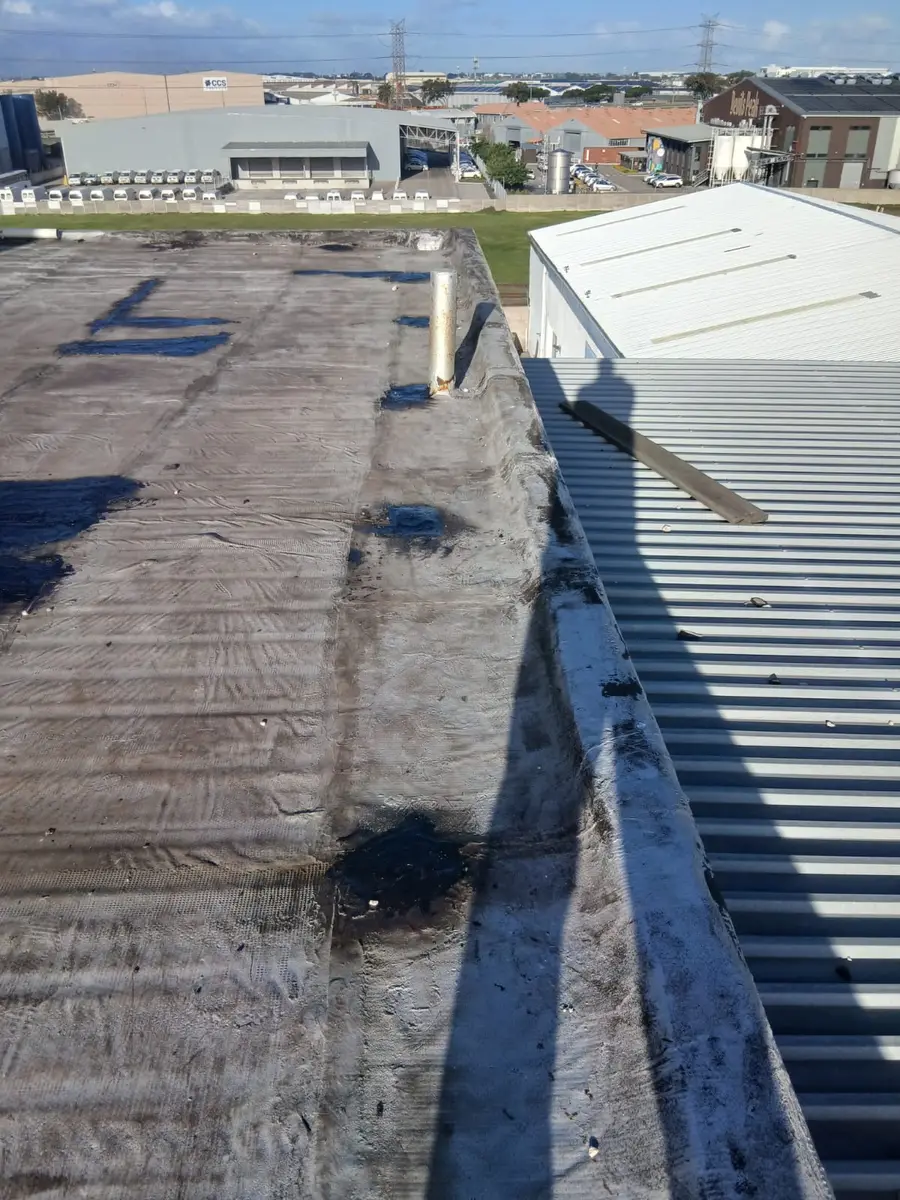
If you have a flat or low-pitch roof in Cape Town and you've been quoted for waterproofing, you've almost certainly seen two systems on the table: torch-on bitumen and liquid polyurethane. They are not interchangeable. The right choice depends on your substrate, your exposure, and the weather window you have before the work needs to be done. This guide is the honest answer.
The short answer
For a residential flat concrete slab in the Cape Town metro, torch-on bitumen (Index, Derbigum or Sika) is the default. It is faster to install, cheaper per square metre, and has a longer track record on a Cape winter exposure. Lifespan from an approved applicator runs 15-20 years on the typical residential or apartment-block slab — but that figure assumes the roof is actually maintained. Manufacturers state their life expectancy conditionally for a reason: Derbigum's own datasheet puts Unitorch E "well in excess of 20 years when maintained", while the material warranty behind it is 10 years. Budget for an inspection every year or two and a maintenance visit every four to five.
For balcony decks, complex parapet geometries, anything with multiple penetrations (drains, balustrade fixings, lighting plinths), or a substrate that already has a perished liquid system on it, liquid polyurethane (Sikalastic, Mapelastic, ABE Super Laycryl) is the right call. It is more expensive per m² but the seamless detailing pays back on geometry where torch-on lap joints would fail first.
Anything else is a function of the specific job. The system gets specified after the on-site inspection — not over the phone, and not from a brochure.
Side-by-side comparison
| Factor | Torch-on bitumen | Liquid polyurethane |
|---|---|---|
| Typical lifespan (approved applicator, maintained) | 15-20 years | 15-25 years |
| 2026 indicative price (Cape Town residential) | R300-R420 per m² | R350-R550 per m² |
| Application speed (residential roof) | 1-2 days | 3-5 days (between coats) |
| Weather window required | Dry substrate, light wind. Derbigum's spec says to avoid rough handling below 5°C and to stop work below -2°C — so cold is a handling problem long before it is a hard stop. ARMA adds that in cold weather rolls should be stored above 10°C for 24 hours before they go down | Dry substrate, ambient >8°C, 4-6 hour cure between coats, no rain forecast |
| Best suited to | Flat concrete slabs, large simple geometries, apartment-block roofs | Balcony decks, complex parapet geometry, multiple penetrations, overlay onto existing failed liquid |
| Joint risk | Lap joints — heat-fused but still the first point of failure if mis-applied | Seamless — no joint risk by definition |
| UV resistance | Requires mineral chip top-coat or aluminium reflective paint | Aliphatic top-coat required on cheaper systems; premium systems UV-stable as installed |
| Salt resistance (Atlantic Seaboard) | Excellent with mineral chip — knock 20% off lifespan range on direct salt exposure | Excellent — penetration detailing is what actually matters on coastal exposure |
| Manufacturer warranty (approved applicator) | Up to 20 years on Index Argo / Derbigum SP4 Guardian system | Up to 20 years on Sikalastic premium systems |
How torch-on actually works
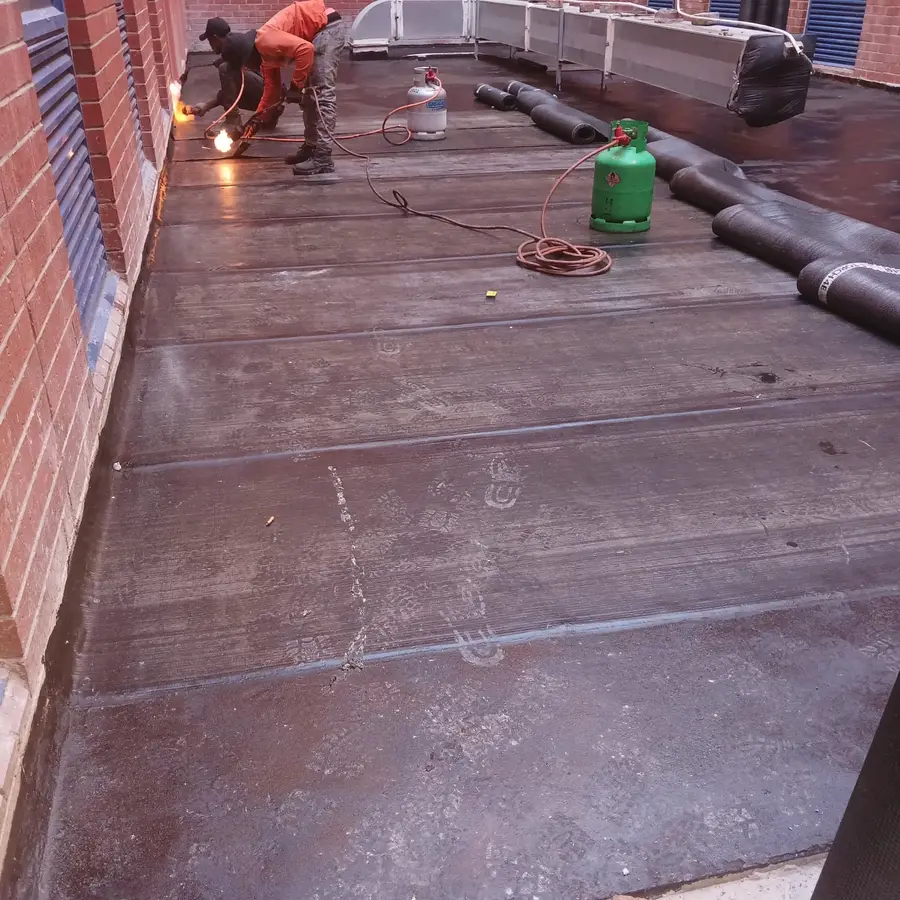
Torch-on bitumen is a pre-fabricated polymer-modified bitumen membrane (SBS or APP modified) supplied in rolls — typically 1 m wide, 10 m long, 3 mm or 4 mm thick. The roll is primed onto the substrate, then heat-fused at the leading edge with a propane torch. The bitumen at the membrane underside melts back to the manufacturer's "flow point" and bonds to the primer.
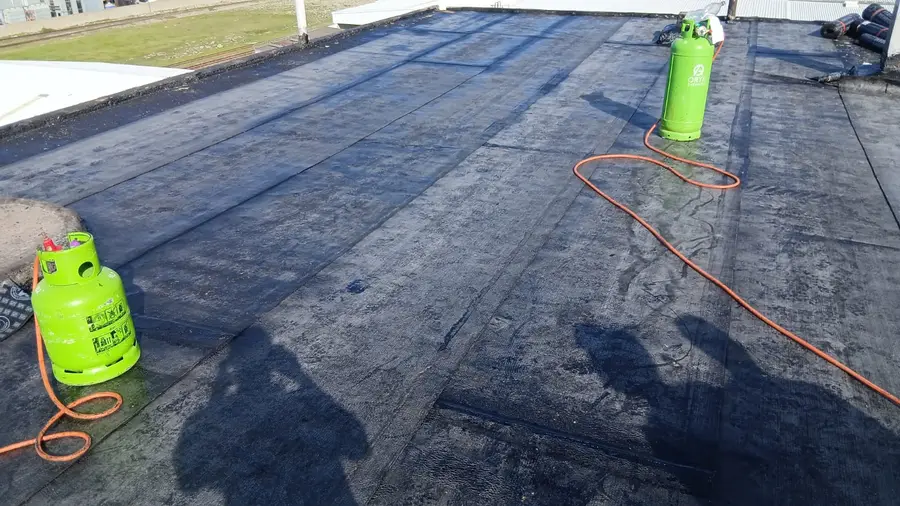
The lap joints between adjacent rolls are the system's only joint risk. A properly applied lap shows a visible 5-10 mm bleed-out of melted bitumen at the seam — that's how a roof inspector tells whether the lap was actually heat-fused or just rolled over. Without the bleed-out, the lap is mechanically pressed-together, not fused, and it will lift in the first south-easter.
The advantage on a Cape Town flat roof is the speed. A 100 m² residential slab can be primed and torched in a single day, mineral-chipped or top-coated the next morning, and walked on by the following afternoon. There is no inter-coat cure time to plan around — once the membrane is down, the membrane is the waterproofing layer.
How liquid waterproofing actually works
Liquid polyurethane is a single- or two-pack reactive resin applied with a roller or airless spray. It cures into a continuous seamless membrane — no laps, no joints. Typical residential application is two coats at 1.0-1.4 m² per litre per coat, with a fibre-reinforcement mesh embedded in the first coat at any geometry change (corners, parapet upturn, drain perimeter, balustrade fixings).
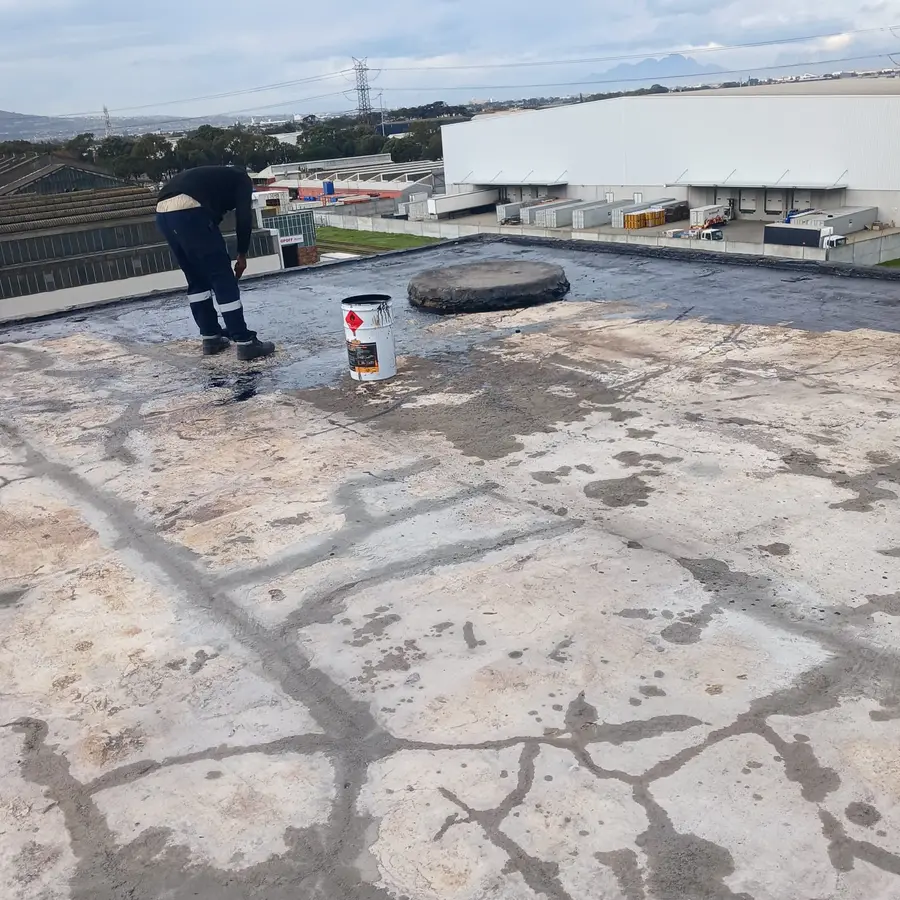
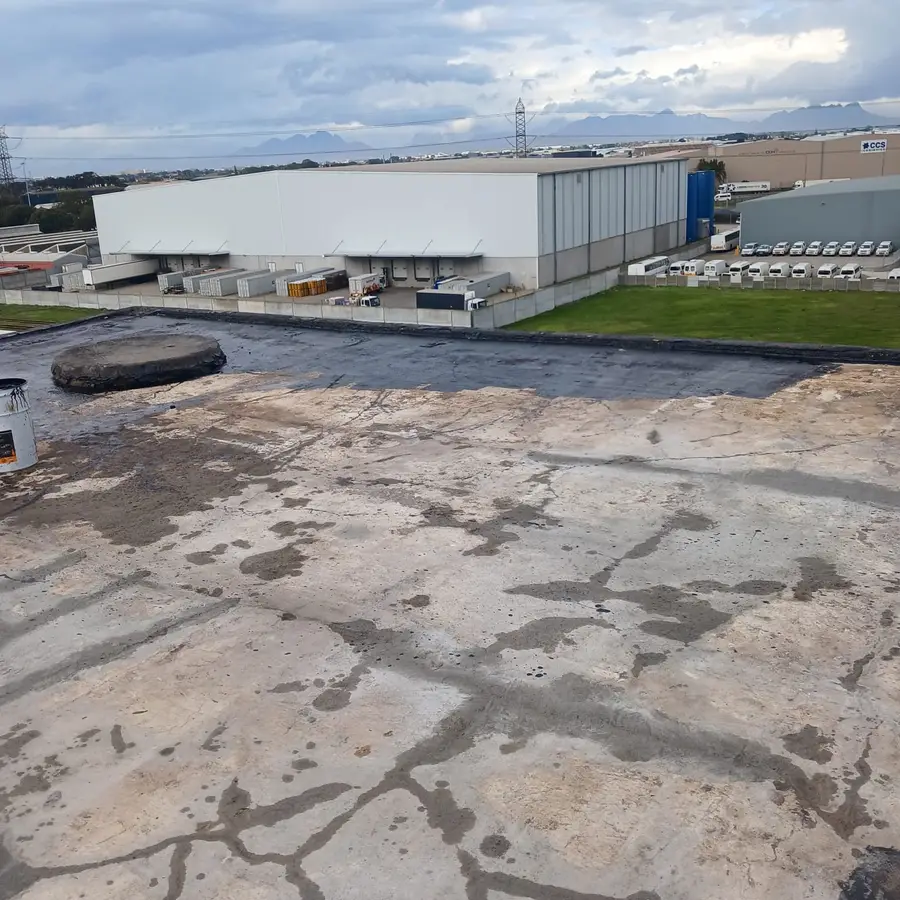
The substrate prep is more demanding than torch-on: it must be dry, dust-free, primed with a compatible primer, and at the right ambient temperature for the resin to react. The trade-off is that the seamless finish wraps tight around any geometry. Where torch-on needs separate apron flashings to cope with a parapet upturn or a balustrade penetration, liquid polyurethane just keeps going up the wall and around the fixing.
The longer install time — 3 to 5 days for a residential roof, depending on cure cycles — is the main practical disadvantage. In a Cape winter where the dry window is unreliable, that 3-5 day commitment is significantly harder to schedule than a 1-2 day torch-on job.
Which one for which job
Flat apartment-block roof (Sea Point / Green Point / Strand)
Torch-on. Large simple geometries, mostly-flat substrate, body-corporate scheduling that prefers the shorter install window. Mineral chip top-coat for the salt exposure. A perimeter parapet refurbishment in the same scope keeps the apron flashings continuous with the field membrane.
Residential flat concrete slab (Plumstead / Diep River / Kenilworth bungalow back-extensions)
Torch-on, almost always. Single-storey, simple geometry, lower cost. The 1970s-1980s flat-roof additions in the Southern Suburbs are exactly the job torch-on was designed for.
Apartment balcony deck (Sea Point / Camps Bay / Claremont townhouse)
Liquid polyurethane. Multiple penetrations (drain, balustrade fixings, threshold), a tile-bed-and-screed finish that has to sit over the membrane, and a parapet upturn that needs to wrap continuously up the wall. Torch-on apron flashings on a balcony invariably fail at the balustrade fixing within 4-6 years. The full scope, including the strip-and-retile option, is on our balcony and deck waterproofing page.
Entertainment terrace / Camps Bay villa deck
Liquid polyurethane with mineral chip topcoat under a screed-and-tile finish. Three layers: the liquid membrane on the slab, a granolithic screed-and-tile finish to take furniture and foot traffic, proper penetration detailing around lighting plinths and drains.
Pitched concrete-tile or IBR roof (Tokai / Bergvliet / Mitchells Plain)
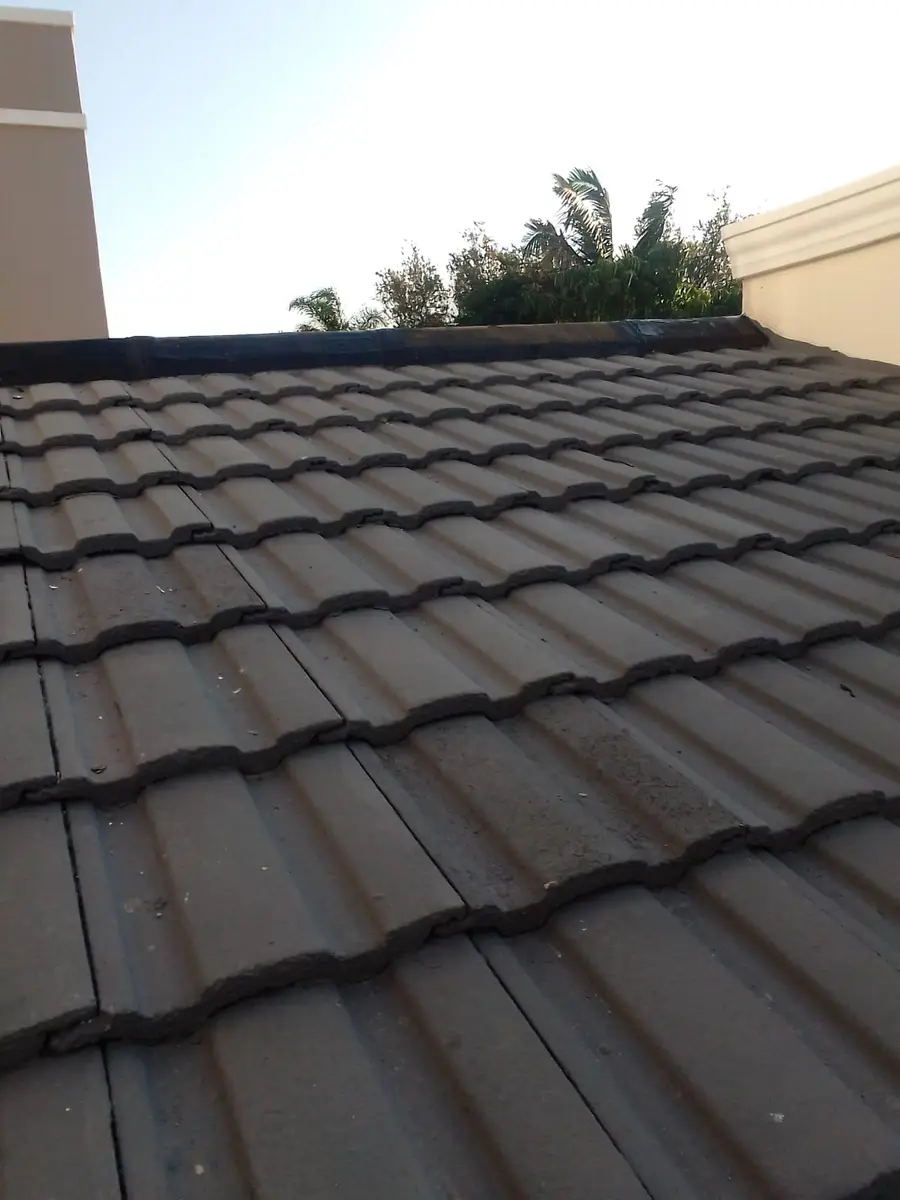
Neither. Pitched tile roofs need underlay refurbishment plus ridge re-bedding — not membrane waterproofing. A "torch-on coating" on a pitched tile roof is a sign the contractor is selling the wrong system.
Overlay onto existing failed liquid waterproofing
Liquid polyurethane. A torch-on overlay onto a perished liquid system requires the failed layer to be mechanically stripped first — usually impractical on apartment-block roofs. A compatible liquid system can be applied over the prepared substrate after spot-repair.
The pricing question
Per-square-metre prices in 2026 across the Cape Town metro for residential easy-access jobs — high-rise body-corporate scopes, scaffolded apartment blocks and Atlantic Seaboard work typically price 20-30% higher than these ranges. For the full breakdown across every service we run, see our 2026 Cape Town waterproofing price guide:
- Torch-on bitumen, single-layer 4 mm: R300-R420/m². Includes primer, membrane, lap-and-end bedding, mineral chip top-coat.
- Torch-on bitumen, double-layer 3 mm + 4 mm: R420-R560/m². For Atlantic Seaboard exposure or where a longer-life build-up is specified. Add R80-R150 per linear m for parapet upstands and R450-R900 per drain or penetration detail.
- Liquid acrylic (budget): R150-R260/m². Cheapest option but the shortest-lived, useful as a recoat over a sound substrate, not a primary waterproofing.
- Liquid polyurethane: R350-R550/m². Includes primer, fibre reinforcement at geometry changes, two coats with aliphatic UV top-coat.
- Balcony decks: R280-R450/m² for a liquid PU membrane on a sound substrate, R350-R600/m² for SBS torch-on, and R600-R1,100/m² for a full strip, waterproof, screed and re-tile (tiles excluded).
- Atlantic Seaboard uplift: 10-15% on any of the above for direct salt exposure (Sea Point, Camps Bay, Bantry Bay, Strand seafront).
The fixed written quote always lands lower than the brochure spread on a properly inspected job — we know exactly which areas need full system and which need spot repair. We never give a per-m² number over the phone.
Common mistakes both ways
- Specifying torch-on for a balcony with five penetrations. Saves R150/m² on the quote, fails at the balustrade fixings in year four. The "saving" cost three times the price difference to redo.
- Specifying liquid for a flat 80 m² apartment-block roof with two drain penetrations. A 5-day install scheduling problem when torch-on would have been 2 days. The system itself works fine — but the schedule cost more than the materials saved.
- Applying liquid polyurethane onto a wet substrate. Bond failure within months. Cape winter forces this mistake on contractors trying to hit a deadline before the next front lands.
- Skipping the mineral chip top-coat on torch-on. The membrane survives but the surface degrades in 5-7 years from UV exposure. The chip is non-optional in Cape Town.
- Calling a single-coat acrylic "waterproofing". It is roof paint. Useful as a periodic recoat over an intact membrane; useless as a primary waterproofing layer.
The bottom line
For a typical Cape Town flat-roof job — apartment block, residential extension, simple geometry — torch-on bitumen is the system to pick. It is faster, cheaper, and has a longer Cape Town track record. For balcony decks, complex parapets, anything with multiple penetrations, or anywhere geometry-around-fixings matters, liquid polyurethane is the right answer.
The right specification comes from the on-site inspection. If a contractor is quoting one system before they've climbed up to look, that's the signal to get a second opinion. Send a free quote request and we'll come out for the inspection — fixed written quote in your inbox the same business day.
For more on the systems individually: our torch-on waterproofing page covers Index, Derbigum and Sika install detail. Our flat-roof waterproofing page covers the system selection logic in more detail for the residential and apartment-block stock.
Need a free on-site quote?
Our Cape Town–based team comes to you for the inspection, identifies the actual failure point, and issues a fixed written quote — usually same business day.
Frequently asked questions
Can torch-on go on during Cape Town winter?+
Yes, in dry windows. What torch-on actually needs is a dry, primed substrate — cold is a smaller obstacle than most people assume. The Derbigum handling spec says to avoid rough handling of the rolls below 5°C and to stop work below -2°C, which means the system is designed to be installed in cold weather, carefully, not to wait for warmth. ARMA adds the practical step for cold conditions: store the rolls above 10°C for at least 24 hours before application so the membrane stays flexible during roll-out. A Cape winter comfortably clears both. The harder part is scheduling: most winter installs queue for a 24-48 hour dry window that shifts several times before the work actually happens. Booking the inspection in autumn and the work in early winter is more reliable than reactive winter scheduling.
Is liquid waterproofing actually better than torch-on?+
It depends on the geometry. Liquid polyurethane is better on balconies, complex parapets, and anywhere the system has to wrap around multiple penetrations. Torch-on is better on flat slabs with simple geometry — faster install, cheaper per m², and the lap-joint risk is well understood. Neither is universally "better" — the right system is the one specified for the substrate.
How do I know if my contractor torched the laps properly?+
A properly heat-fused lap shows a visible 5-10 mm bleed-out of melted bitumen at the seam. You can see it on the finished membrane. Without the bleed-out, the lap was rolled over but not fused — it will lift in the first south-easter. Ask the contractor to point out the bleed-out on completion. If it is not there, the work fails before the warranty period is half-served.
Is liquid waterproofing more expensive than torch-on?+
Less than most people expect. Polyurethane runs R350 to R550 per m² against R300 to R420 for a single-layer torch-on, and a double-layer torch-on build-up at R420 to R560 can cost more than the liquid. Where polyurethane does come in higher, three things drive it. The labour is longer — 3-5 days vs 1-2 for the same surface area, because of inter-coat cure times. The material cost per m² is higher for a premium system. And the substrate prep is more demanding (dry, clean, primed, ambient-temperature-controlled) so the contractor needs more weather discipline to deliver a warranty-quality finish.
Can I do torch-on or liquid waterproofing myself?+
Torch-on requires gas safety certification and the manufacturer warranty (Index, Derbigum, Sika) is voided if applied by a non-approved applicator. DIY torch-on jobs lose the 15-year product warranty entirely. Liquid acrylic over a sound substrate is achievable as a maintenance recoat for an experienced DIYer — but liquid polyurethane needs primer compatibility, dry-film-thickness control and dew-point calculations that are not practical without the equipment. We do not recommend DIY for either as a primary waterproofing layer.
Will my insurance cover a roof that was coated but not waterproofed?+
Usually no. South African insurers typically reject claims where the failed layer is a roof paint or single-coat acrylic rather than a true membrane — the failure gets treated as wear-and-tear maintenance, which most policies exclude. A torch-on or liquid polyurethane membrane installed by an approved applicator, with the warranty certificate on file, is what loss adjusters generally recognise as the waterproofing layer for claims purposes. Keep the certificate and any annual inspection records — they materially help if you ever do need to claim.