Rising Damp Treatment in Cape Town
Chemical DPC injection to BS 6576, hack-off to 300mm above the tide-mark, and SR1/SR2 salt-resistant render — backed by a 10-year workmanship guarantee on properly diagnosed rising damp.
Benefits
Permanent silane/siloxane chemical barrier injected to BS 6576 — the British Standard the manufacturer warranties (Dryzone, Permagard, Safeguard) are written against
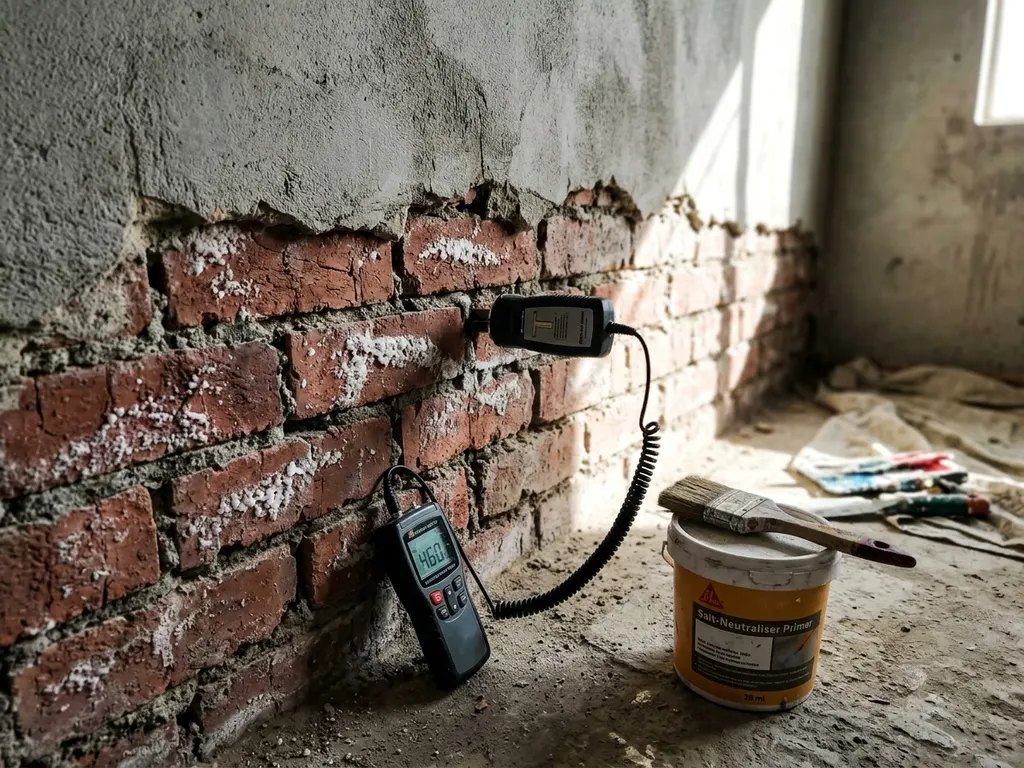
Salt-neutraliser primer applied before re-render, so hygroscopic nitrates and chlorides don't pull humidity out of the air and re-bloom
Hack-off carried 300mm above the highest visible damp line — not the 100mm overlap most cheap quotes try to get away with
SR1 or SR2 spec breathable salt-resistant render (not standard cement plaster) so the wall can dry through over 12-18 months without trapping moisture
Mineral or silicate finish paint that lets water vapour out — eliminates the PVA blister-and-peel cycle that follows a re-paint over old plaster
10-year workmanship guarantee on every job we diagnose as true rising damp, backed by certified-applicator status with the chemical supplier
Our Process
Diagnostic visit — conductivity protimeter readings taken at 100mm, 600mm and 1.5m, plus a calcium-carbide salt-test on a mortar sample, so we can prove rising damp before quoting (we walk away from misdiagnosed jobs)
External walk-around to rule out the cheaper fixes first: raised flowerbeds, paving lapped above DPC level, plaster bridges, blocked weep-holes, leaking downpipes feeding the wall — these get corrected before any injection happens
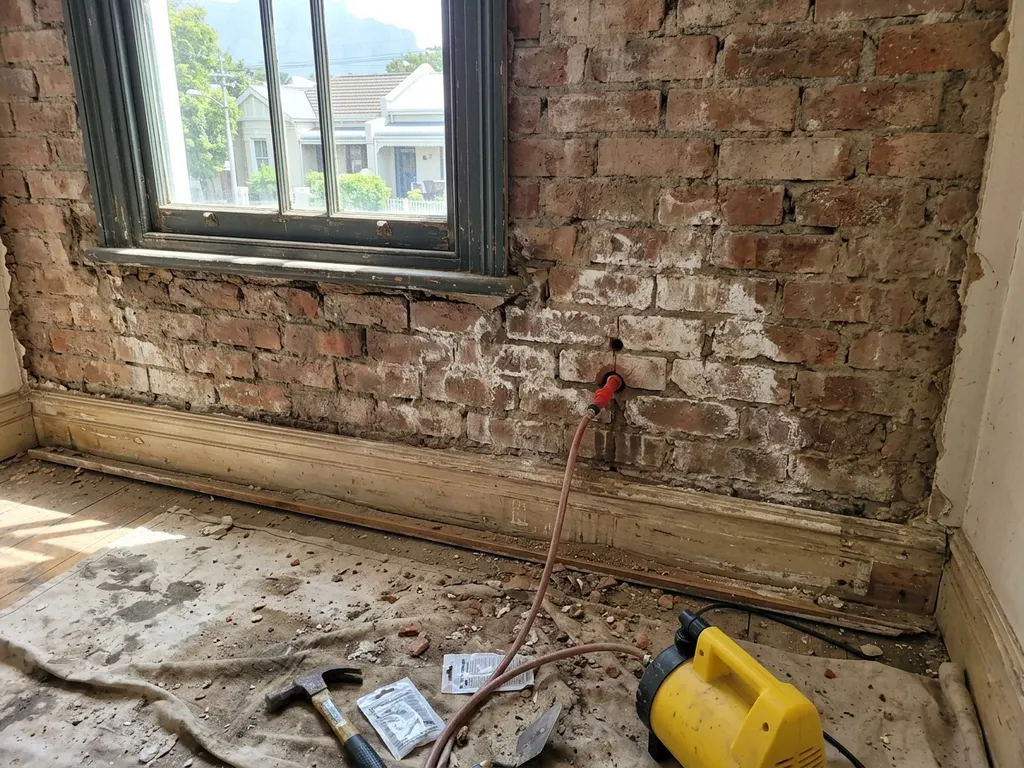
Mortar-bed drilling at 110-120mm centres, one to two brick courses above external ground level, into a single horizontal joint — never into the brick face (BS 6576 spec)
Low-pressure silane/siloxane cream injected until saturation, holes plugged with colour-matched mortar, batch numbers and applicator ID logged for the manufacturer warranty
Hack-off of all contaminated plaster to 300mm above the highest tide-mark — back to clean brick, not just chasing the visible damp line
Salt-neutralising primer brushed onto exposed brickwork, then SR1 (lighter contamination) or SR2 (heavy salt loading) render applied in two coats with a fibre-mesh between for crack control
14-day cure under controlled drying conditions before any decoration; finish coat is breathable mineral or silicate paint — strictly no PVA, no acrylic, no plastic-membrane primers
Pricing
From R450/m linear
Chemical injection is R450-R900 per linear metre depending on wall thickness (115mm single skin in Langa stock vs 220mm double-leaf in Observatory and City Bowl vs 340mm cavity in newer Macassar builds). The re-render is the larger line item at R260-R420/m² for SR1 spec, R380-R520/m² for SR2 where salt loading is heavy. Typical Athlone bungalow elevation of 6-7m treated to 1.2m height runs R9,500-R15,000 all-in. Quotes below R400/m linear almost always use uncertified product and void the manufacturer warranty — ask for the applicator certificate number before paying a deposit.
Get Accurate QuoteFrequently Asked Questions
How do I tell rising damp apart from penetrating damp?
Rising damp has three signatures that penetrating damp doesn't. First, the tide-line is horizontal and consistent — penetrating damp produces irregular patches centred on the leak source (cracked render, perished pointing, a blocked gutter overflowing onto the wall). Second, rising damp is worst at floor level and tapers off above 1m — penetrating damp can appear at any height, often higher up. Third, rising damp deposits salts (white fluffy crystals you can rub off with your finger); penetrating damp doesn't, because the water is coming through the wall too fast to leave salts behind. We confirm with conductivity readings at three heights — if the 100mm reading is over 25% WME and the 1.5m reading is under 10%, it's rising. A 30-minute survey settles the question before anyone quotes you for the wrong job.
Why hack the plaster off to 300mm above the tide-mark instead of just at the line?
Because the salts are hygroscopic — they pull moisture out of the air, not just out of the wall. Decades of rising damp deposit nitrate and chloride salts not only at the tide-line but in a halo above it, where the moisture front evaporated and left the salts behind. If you only hack off to the visible mark, that halo sits there absorbing humidity from the room every winter and the wall reads damp on a protimeter for years even though the actual rising has been stopped. BS 6576 specifies 300mm minimum above the highest tide reading. We've stripped jobs done by other contractors at 100mm overlap and found the salt halo extending another 250mm above what they left intact.
What's the difference between SR1 and SR2 render?
SR1 and SR2 are the two specifications under the Renderoc / Dryzone / Permagard salt-resistant render systems. SR1 is the standard renovating render, rated for moderate salt contamination (typical post-war Athlone or Macassar wall once the moisture is stopped). SR2 is heavier-duty, with extra salt-locking additives and a thicker build-up — used on Langa or older City Bowl walls where decades of unchecked rising damp have left heavy chloride loading from coastal sea-air salts riding the moisture front. We test the mortar with a salt-test strip before quoting and spec the system to match. Using SR1 on a wall that needs SR2 is the most common reason a damp job re-blooms in year two.
Why can't I just paint over the damp wall with a damp-proof paint?
Damp-proof paint (bitumen-based or rubberised emulsion) is a sealant, not a treatment. It traps moisture inside the wall, where it goes sideways into adjacent rooms, up into floorboards, or pressure-blows the next coat of decoration. The salts also keep migrating behind the sealed surface and will eventually push the paint off as flakes. PVA is worse — it's permeable enough to let moisture through but impermeable enough to slow drying, so you get a permanently damp-looking wall that bubbles after every wet winter. Mineral and silicate paints work because they let water vapour move freely while still blocking liquid water; that's what BS 6576 and every certified DPC supplier specifies as the finish coat.
How long after treatment can I redecorate?
Minimum 14 days under normal Cape conditions, often longer in winter. The new SR1/SR2 render needs to cure chemically before any decoration goes on, and the wall itself needs to release stored moisture through the breathable plaster — that's the whole point of using a renovating system rather than standard cement plaster. We measure the wall with a protimeter at the 14-day mark; if it reads below 12% WME we approve decoration, if it's higher we extend the dry-down by another week. Skim-coating earlier than that is the single most common installer mistake and the reason you'll see fresh damp jobs blistering again by July. Mineral paint goes on first; PVA, acrylic and vinyl emulsion are all off the table permanently.
Does the 10-year guarantee cover the whole job or just the chemical?
Both — but they're separate guarantees. The chemical itself carries a 20-30 year manufacturer warranty from the supplier (Dryzone, Permagard, Safeguard) covering re-wicking through a properly injected DPC. Our 10-year workmanship guarantee covers the install: correct hole spacing, correct mortar bed, correct hack-off height, correct render spec, correct cure time, correct finish coat. If any part of that fails — re-bloom, render delamination, salt push-through — we come back and rectify at no charge. The guarantee is void if you paint the wall with PVA, plant a flowerbed against it, lap paving above DPC level, or have another contractor cut a chase through the treated section. The exclusions are written into the certificate; we go through them on handover.
Rising Damp Treatment across Cape Town
We cover the suburbs below — free on-site inspection on every quote:
Ready to Get Started?
Get a free, no-obligation rising damp treatment quote from our Cape Town team — on-site inspection included.
Get Free Quote Now