Flat Roof Waterproofing in Cape Town
Cape Town flat-roof waterproofing — torch-on bitumen, liquid polyurethane and acrylic systems engineered to survive south-easter uplift, Atlantic salt spray and winter cold-front deluges.
Benefits
Systems specified to BS 8217 / SANS 10400 wind-uplift loads for Cape Peninsula exposure
Membranes selected for ponding tolerance — critical on older slabs that have settled out of fall
Reflective top-coats and mineral chip finishes that hold up under Atlantic UV without chalking
Approved-applicator status with Index, Derbigum, Sika and Mapei — full warranty cover
On-site fall, drainage and parapet inspection at no cost before quoting
Workmanship guarantee of 10 years backed by the manufacturer's 10–25 year product warranty
Our Process
Site visit — falls measured with a digital level, ponding zones mapped, parapet aprons and outlets inspected
Detailed written quote naming the system, dry-film thickness and finish for your specific substrate
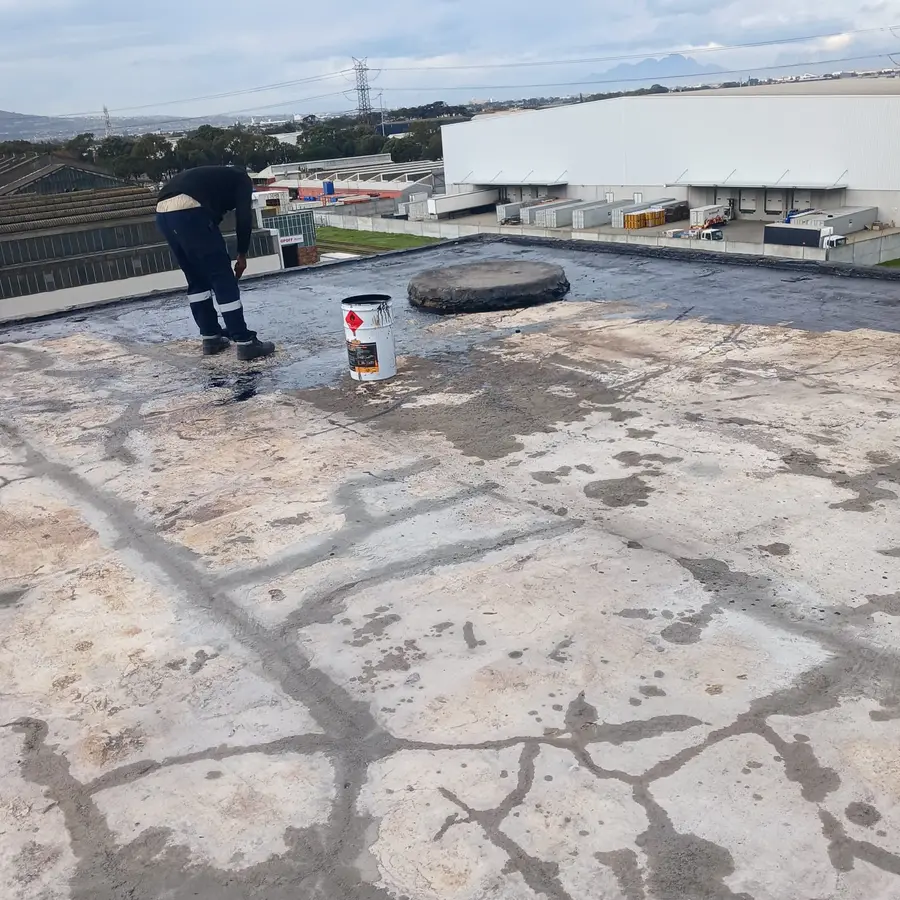
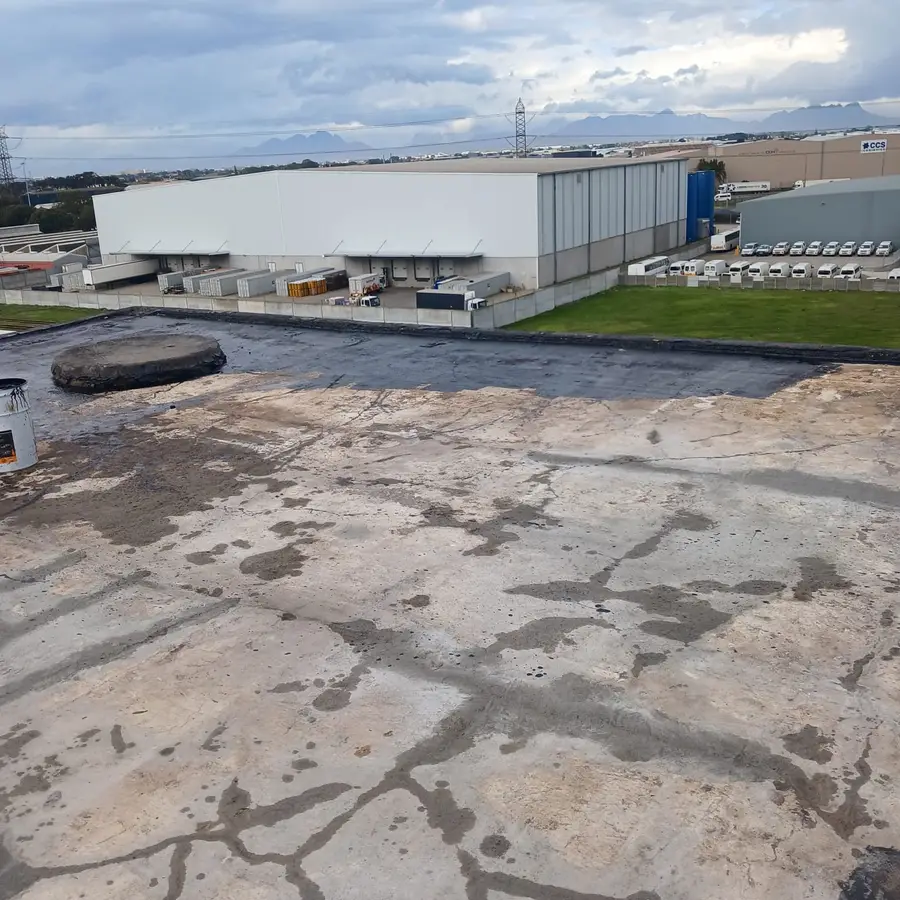
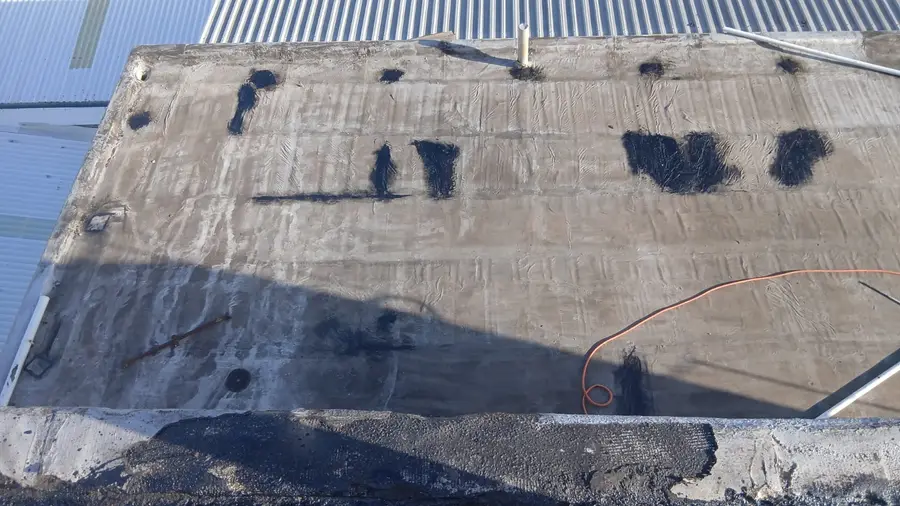
Substrate preparation — high-pressure clean, lift any failed legacy membrane, crack-stitch and screed dead-flat areas
Prime with the manufacturer's matched primer and detail every upstand, outlet, vent and penetration first
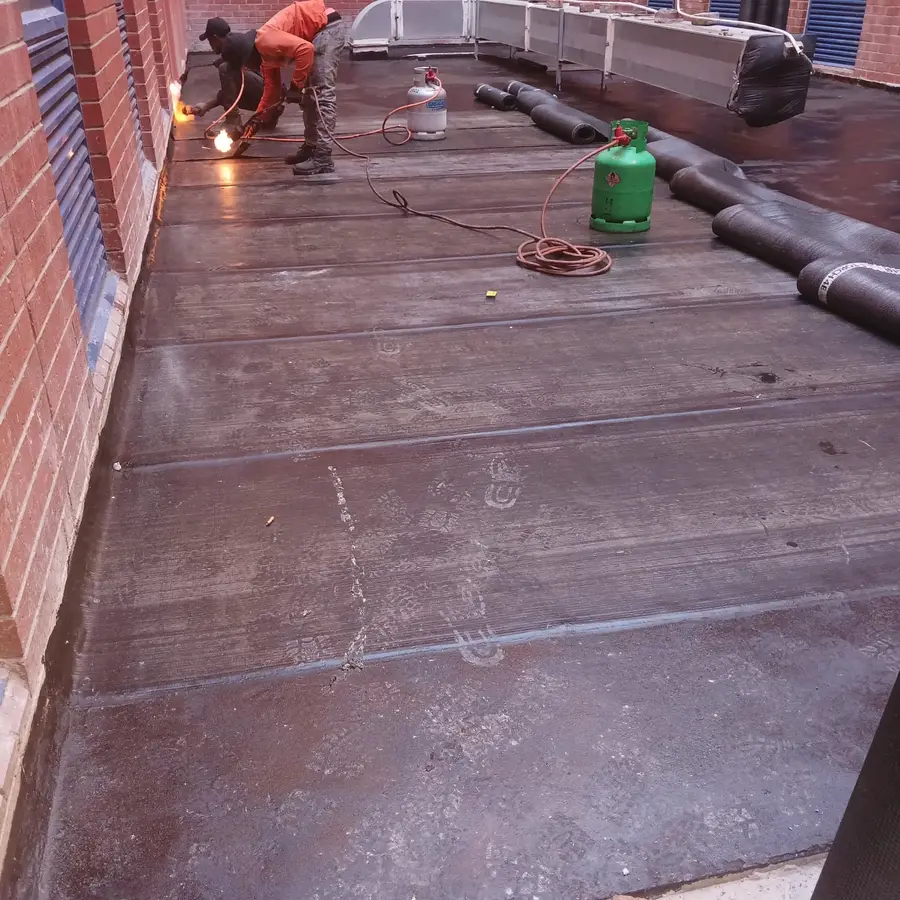
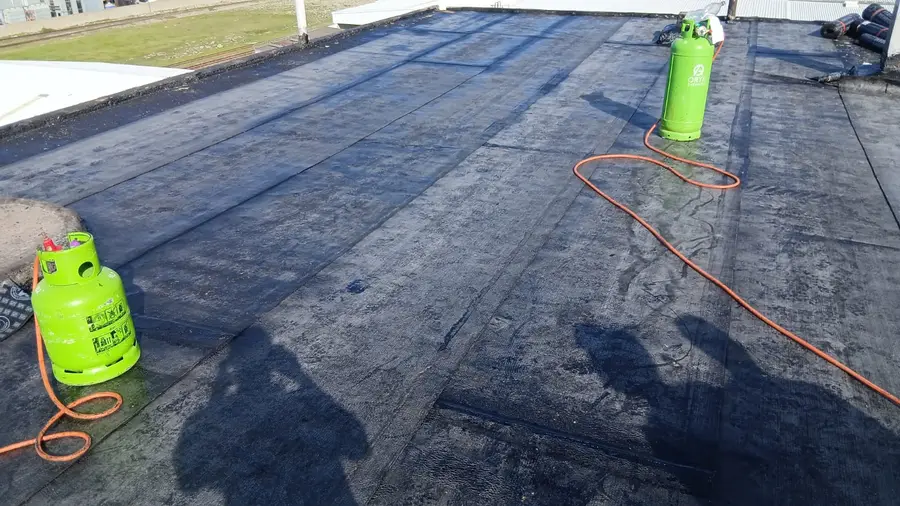
Install the main system — torch-on cap-and-base, polyurethane in two coats with reinforcing fleece, or acrylic with embedded matting
Flood-test for 24–48 hours and chase any pinholes before sign-off
Hand over the 10-year workmanship guarantee and registered manufacturer warranty certificate
Pricing
From R150/m²
Indicative 2026 ZAR rates, system-dependent. Reinforced liquid acrylic R150–R260/m² for refurbs on sound substrates; torch-on bitumen R300–R420/m² on concrete decks (the long-life default); liquid polyurethane R350–R550/m² for complex roofs with many penetrations or where 20+ year life is required. Final pricing fixed after the on-site fall and ponding survey.
Get Accurate QuoteFrequently Asked Questions
Why is my Sea Point flat roof leaking when the pitched roof next door is fine?
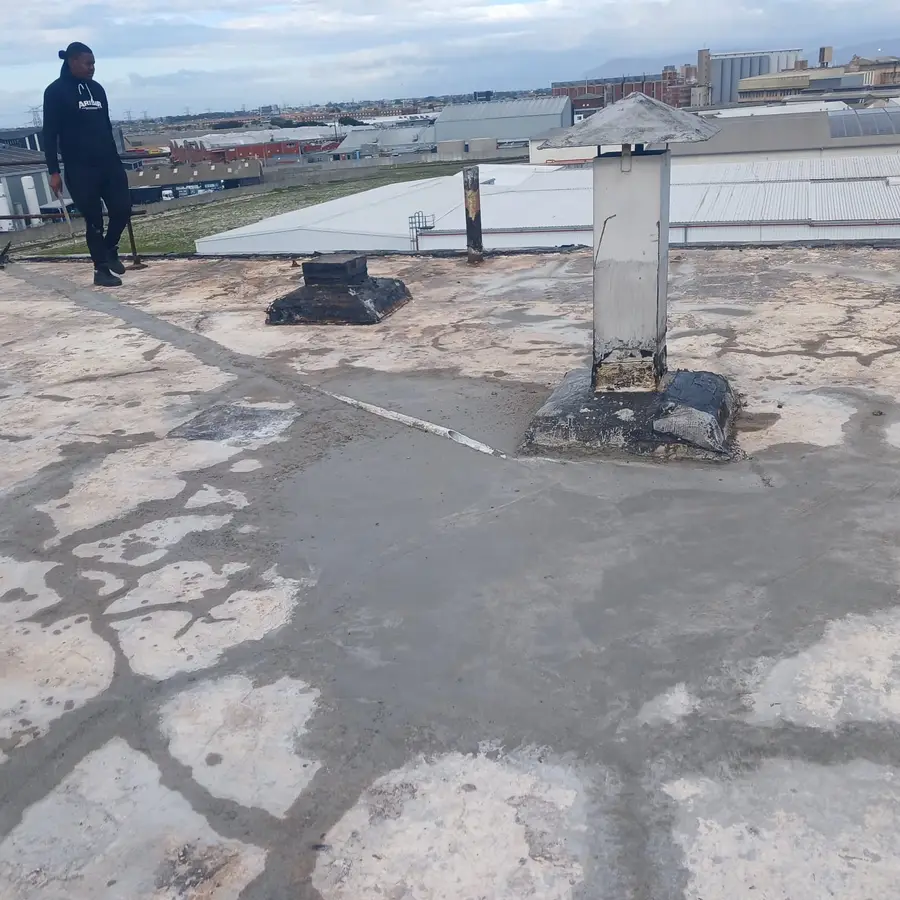
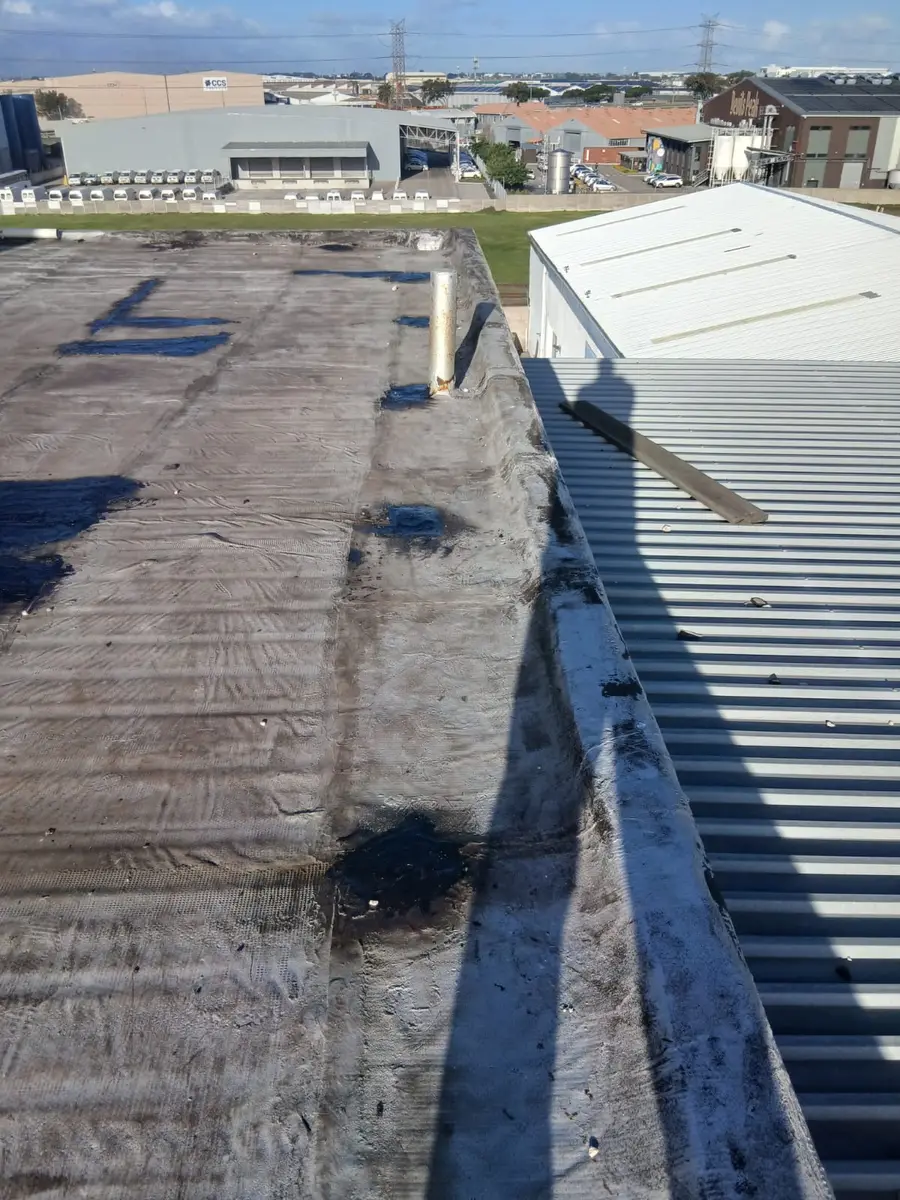
Flat roofs fail for reasons pitched roofs never face. Water that doesn't run off pools — even a code-compliant 1:80 fall leaves shallow ponding for hours after a cold front passes. The membrane sits flat and is asked to behave as a permanent tank lining rather than a shedding surface. On top of that, flat roofs concentrate joints, upstands and outlets in places where movement, thermal cycling and salt-laden south-easter wind do their worst. In a building like a Sea Point apartment block, you also get the Atlantic salt eating exposed aprons and parapet copings. None of these conditions exist on a pitched tile roof — which is why a flat roof needs an engineered system, not the same paint you might roll onto a verandah ceiling.
Torch-on, liquid polyurethane, or acrylic — which is right for a Cape Town flat roof?
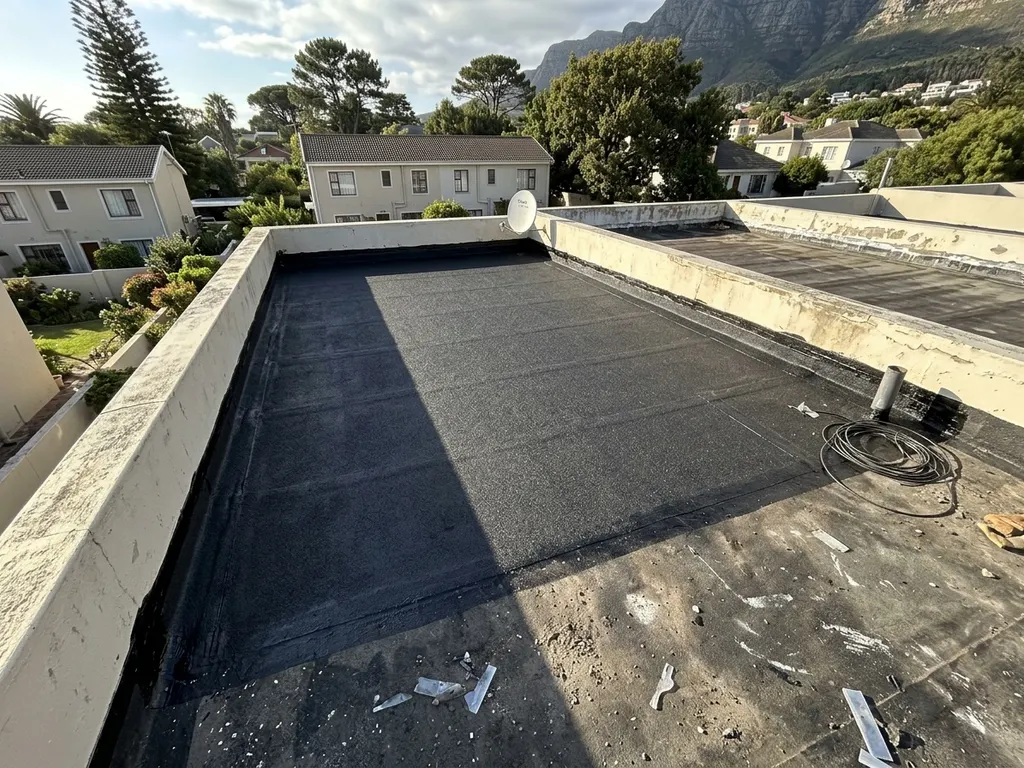
It depends on the substrate, the level of detailing, and the budget. A clean concrete slab — typical of a Camps Bay villa terrace or a newer Atlantic Seaboard penthouse — usually wants torch-on bitumen (Index Argo, Derbigum SP). It handles ponding, gives you 15–20 years, and is the established Cape standard. A Woodstock industrial conversion with sawtooth roof sections, dozens of penetrations and awkward parapet returns is better served by liquid polyurethane (Sikalastic, Mapelastic) because it self-levels and bonds monolithically around every obstacle. For an older Plumstead flat-roof addition where the existing membrane is tired but the deck is sound, two-coat fibre-reinforced liquid acrylic is the budget-respectful refurb option. The free inspection sorts the answer.
Will the south-easter actually lift a torch-on roof in Sea Point or Bantry Bay?
On a properly specified install — no. The risk is real on exposed Atlantic Seaboard buildings, but it is engineered out by three things. First, fully-bonded torch-on (not loose-laid or mechanically-fixed) so there's no flute under the sheet for wind to grip. Second, double-layer cap-and-base with the laps staggered and rolled hot. Third, properly fixed metal capping over every parapet so wind can't get under the apron edge. Where uplift failures happen, it is almost always because someone cut corners on the perimeter detail — a single-layer system loose-laid into a Sea Point southerly gale will absolutely peel. We specify perimeter mechanical fixing on any building above three storeys west of De Waal Drive.
Water is sitting on my flat roof two days after rain — is that a problem?
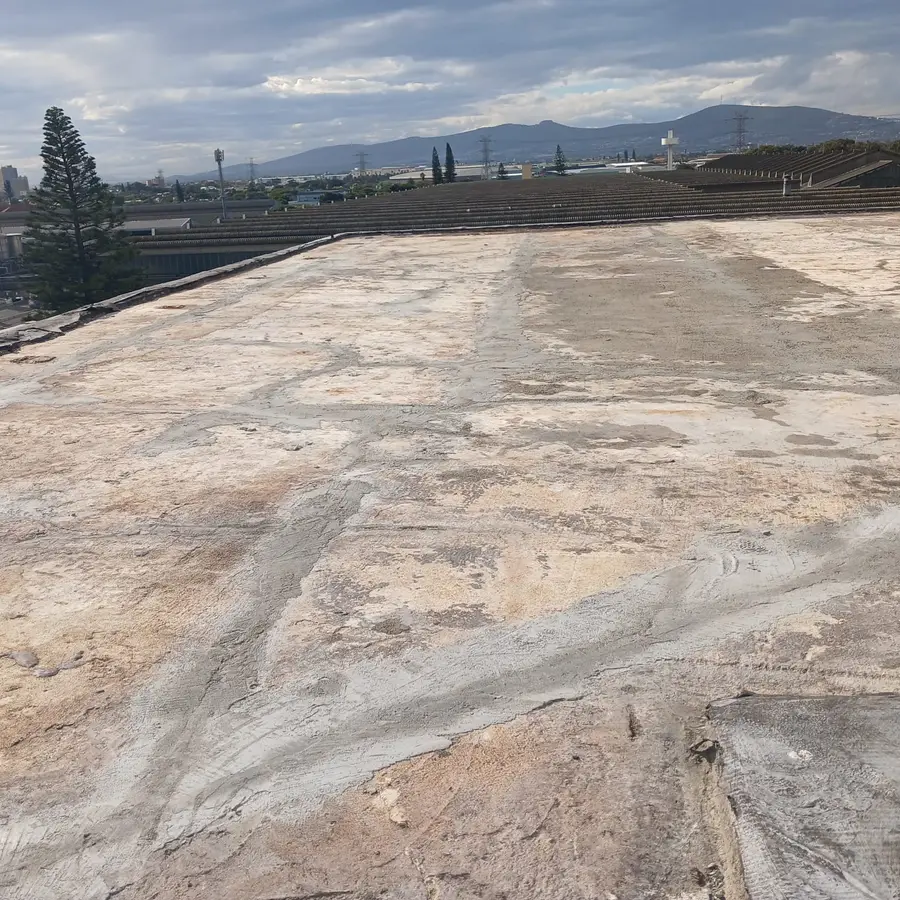
Light ponding that drains inside 48 hours is something most systems tolerate, and it's common on settled flat roofs across older suburbs like Plumstead, Observatory and Salt River. Persistent ponding is a different story — water depths above 25mm, or pools that are still there four days later, accelerate membrane breakdown, encourage algal growth, and put dead load on a slab that wasn't designed to carry it. Two fixes exist. Either we lay a tapered screed-to-falls (cement or lightweight) over the existing deck to redirect water to outlets — usually the right call if the fall has settled to near-flat. Or we install a polyurethane system rated for permanent immersion, accepting the ponding will remain. The inspection identifies which is appropriate.
Can liquid polyurethane be applied during a Cape winter?
Marginally — and we generally don't recommend it. Polyurethane cures by chemical reaction, but it needs the substrate dry and the ambient temperature above roughly 10°C with relative humidity below about 85%. A Cape winter day with overnight rain on the deck and a Newlands fog rolling in fails both gates. We can install during a dry winter break with heated-air drying of the substrate and protective tenting, but the cost and risk both rise. For the same reason we book the bulk of our polyurethane jobs into the February-to-early-May window — there's enough dry weather to install, full-cure and flood-test before the first serious front arrives. Torch-on bitumen is more weather-tolerant in winter and is what we'll usually suggest for an urgent winter job.
My Plumstead flat-roof addition is IBR sheeting, not concrete — what changes?
A lot. Torch-on does not bond to galvanised IBR, and anyone telling you otherwise is selling you a failure. Flat or near-flat IBR — common on 1970s and 1980s additions across the Southern Suburbs — needs either fibre-reinforced liquid acrylic or a polyurethane system, in both cases applied over a metal-specific primer and with extra detail at every screw head, lap joint and ridge. We seal each fastener individually with a reinforcing patch and run a continuous bead at every overlap. Treat it as plenty of careful small details rather than one big roll-out, and an IBR flat will give you a solid 10–12 years on acrylic or 15+ on polyurethane.
Can we use the flat roof as a usable terrace once it's waterproofed?
Yes — but only with the right top layer specified up front. Light foot traffic for inspection or window cleaning is fine on any system. A real terrace — entertainment area, pot plants, occasional furniture — needs either a mineral-chip torch-on cap sheet for impact resistance, a polyurethane top coat with broadcast anti-slip aggregate, or a tile-on-pedestal overlay laid over the waterproofing. We see this most often on Camps Bay villas and converted Woodstock loft buildings where the flat roof is half the lifestyle. Mention intended use during the inspection so we spec it from the outset; retro-fitting a heavier top layer onto a thin system means stripping and starting again.
What happens if Cape rain arrives before the waterproofing has cured?
System-dependent. Torch-on bitumen is effectively watertight the moment the cap sheet is heat-fused and the seams rolled — minutes, not hours. Two-coat liquid acrylic is the most vulnerable: it needs a clean 24–48 hours to cure and will simply wash off a Strand parapet if a southerly squall arrives early. Liquid polyurethane sits in between at two to six hours, with the exact figure on the product data sheet rather than rule-of-thumb. The more common premature-failure cause, though, isn't rain after application — it's residual moisture trapped in the substrate at the start. Damp concrete or a wet screed will blister under a hot Camps Bay February sun as the trapped water vaporises and lifts the membrane from below, no matter which system sits on top. That's why we won't apply to a wet deck and why the bulk of our installs are scheduled for February to early May — full dry-out, full cure, full flood-test, all before the winter rain hits in earnest.
Flat Roof Waterproofing across Cape Town
We cover the suburbs below — free on-site inspection on every quote:
Ready to Get Started?
Get a free, no-obligation flat roof waterproofing quote from our Cape Town team — on-site inspection included.
Get Free Quote Now