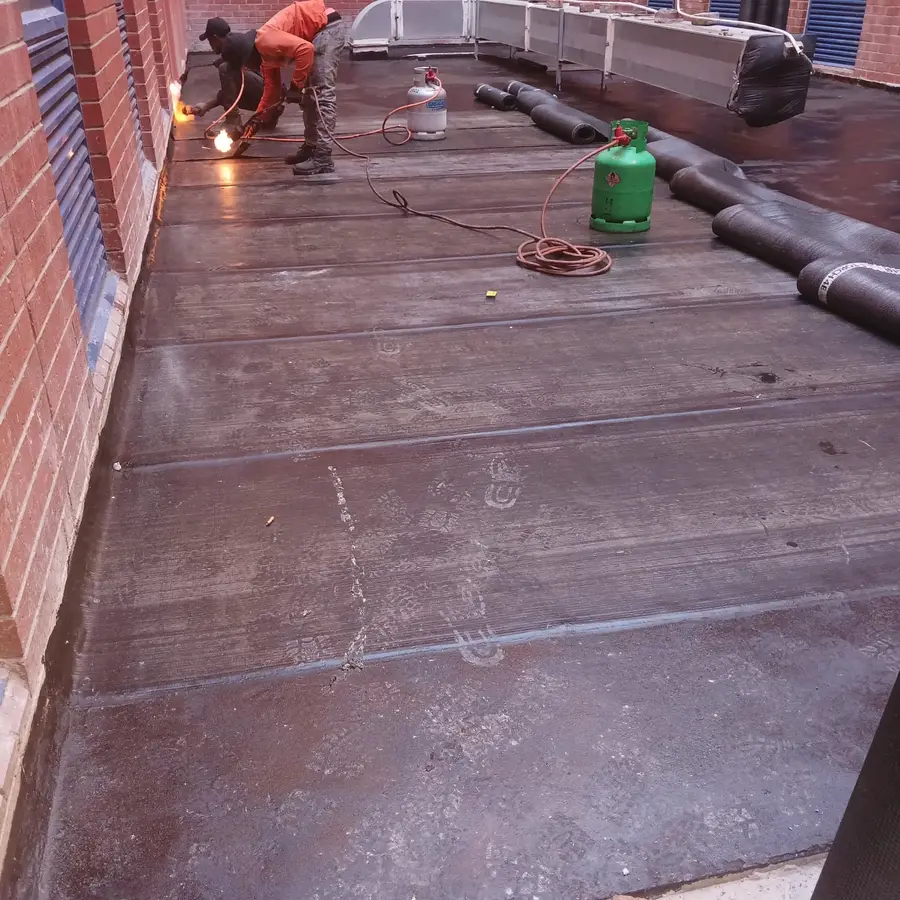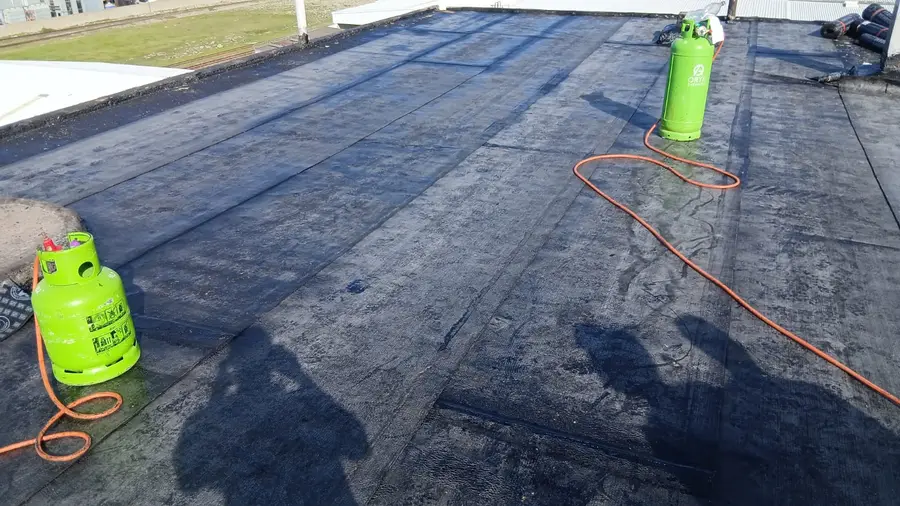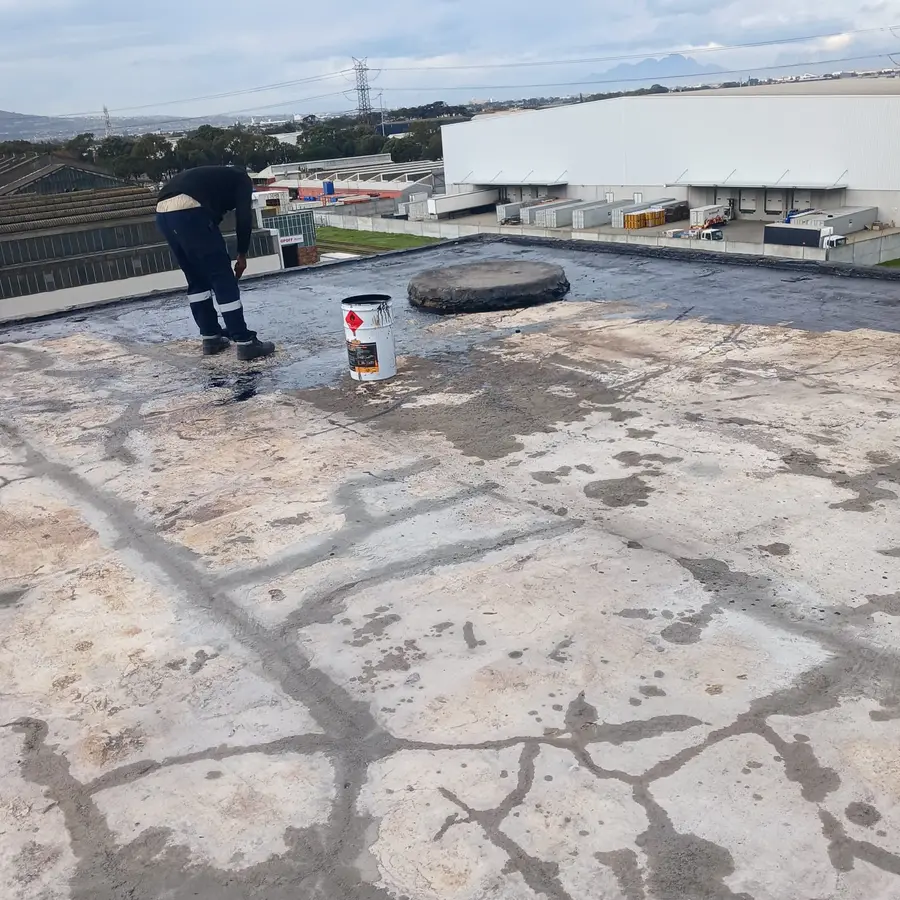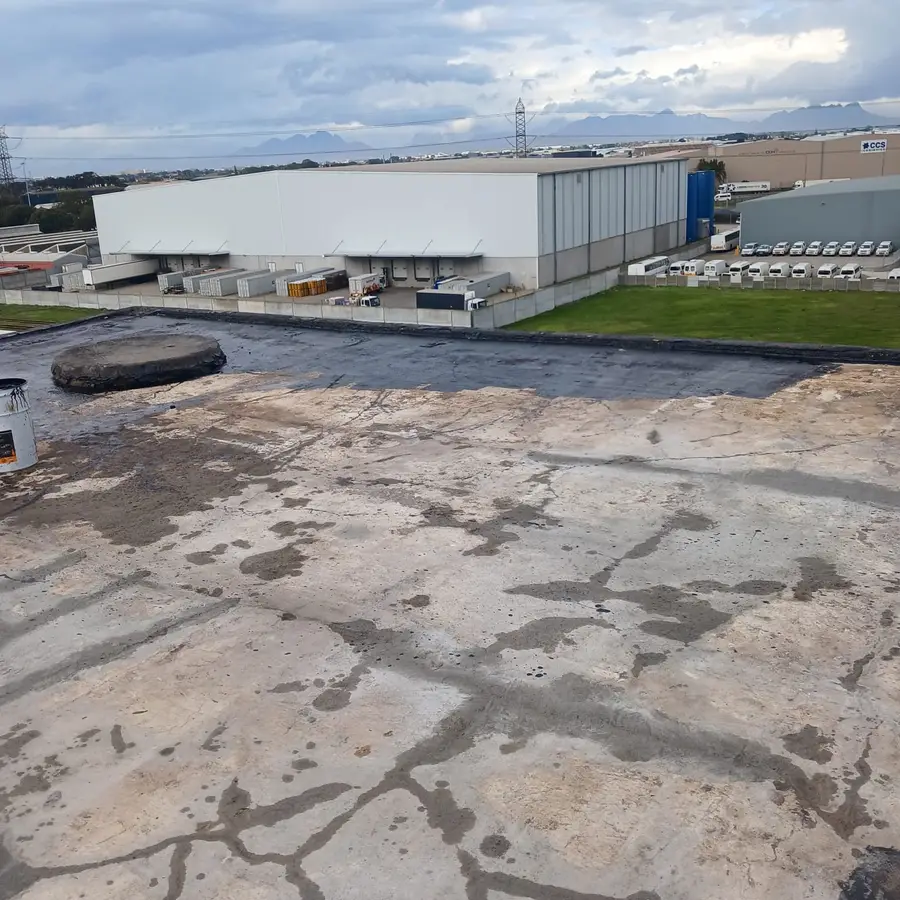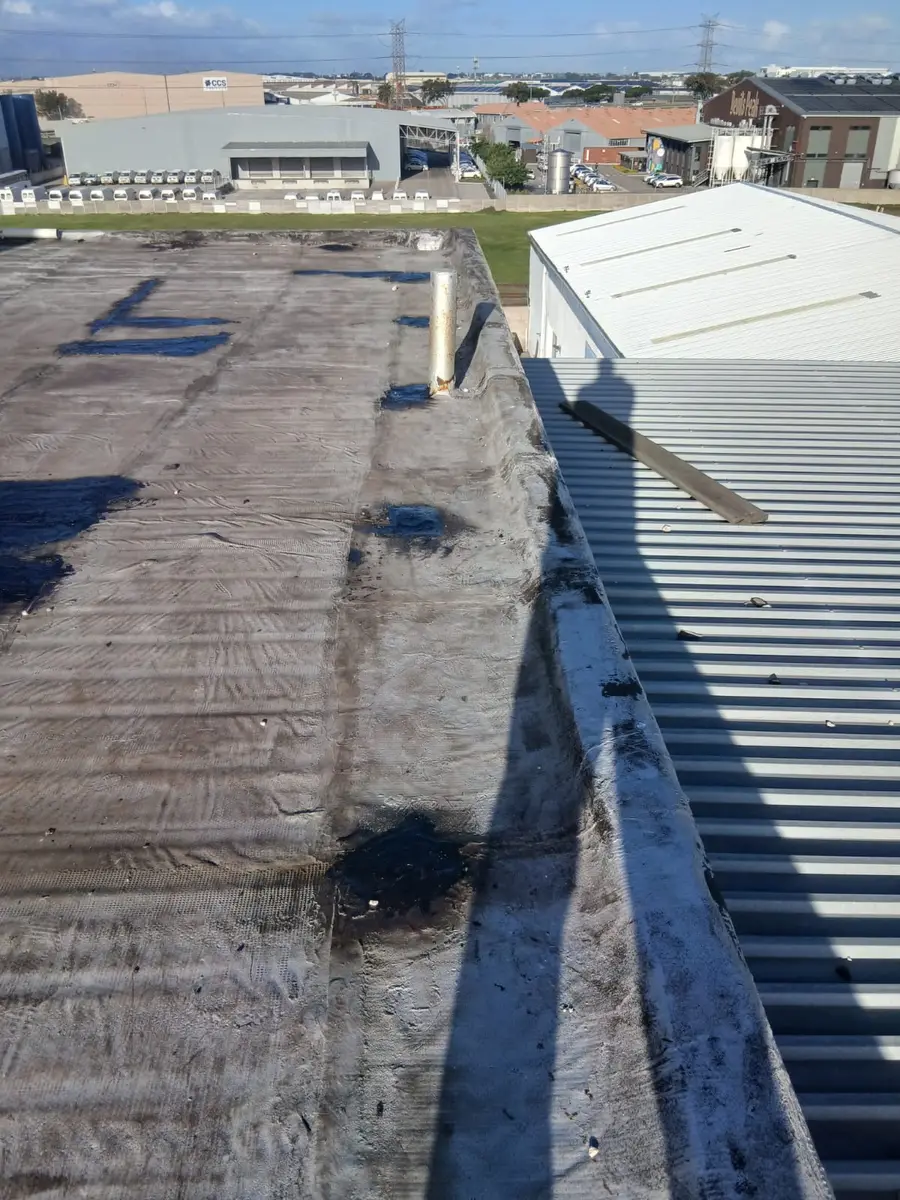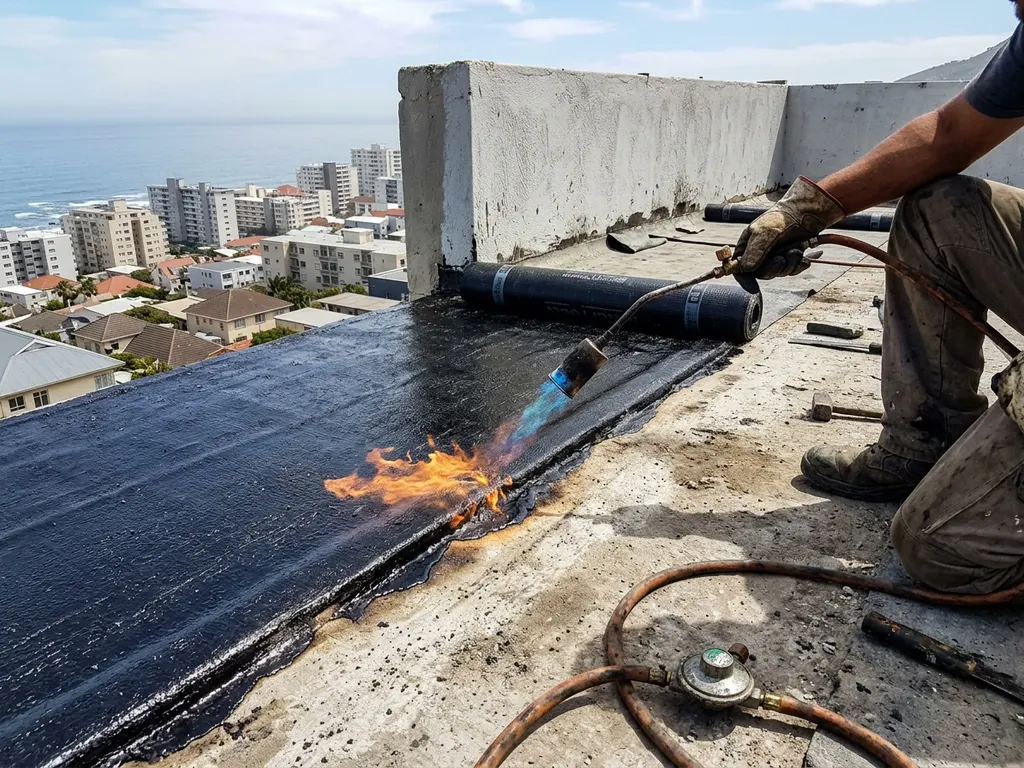
Roof Waterproofing in Cape Town
Vetted Cape Town specialists for flat, pitched and tiled roof waterproofing — torch-on bitumen, liquid membranes, acrylic coatings, polyurethane systems with 10-year workmanship guarantees.
Benefits
10-year workmanship guarantee on every installation
Manufacturer-approved applicators (Index, Derbigum, Sika, Plascon)
Free no-obligation roof inspection before quoting
System matched to your roof type — flat, pitched or tiled
Installs timed for Cape Town's pre-winter dry weather (Feb–early May)
Written certification for body-corporate and insurance claims
Our Process
Free on-site roof inspection — usually within 24-48 hours
Detailed written quote with system spec and warranty terms
Surface preparation — pressure clean, repair, prime
Membrane or coating application by approved applicator team
Post-application water-test and snag list
Issue 10-year workmanship guarantee + manufacturer warranty cert
Pricing
From R220/m²
2026 indicative ZAR pricing. Torch-on R300-R420/m², liquid acrylic R150-R260/m², polyurethane R350-R550/m². Final quote on-site.
Get Accurate QuoteFrequently Asked Questions
How long does roof waterproofing last in Cape Town?
It depends on the system and the exposure. Torch-on bitumen on a properly prepared flat concrete roof lasts 15-20 years when installed by an approved applicator. Liquid acrylic and polyurethane membranes give 10-15 years. Sika and Index polyurethane systems on a clean substrate can reach 20-25 years. On Atlantic Seaboard properties — Sea Point, Camps Bay, Bantry Bay — we knock 20-30% off those lifespans because salt-laden onshore wind degrades every membrane faster than the inland metro. Every job carries a 10-year workmanship guarantee on top of the manufacturer product warranty.
When should I waterproof my roof in Cape Town?
Late summer through early autumn — February to early May — before the first winter front lands. Cape Town's heaviest rainfall runs May through August and the first big north-wester usually arrives in the second or third week of May. Once the wet weather is in, torch-on bitumen needs a dry primed substrate to bond, so jobs get pushed into 24-48 hour dry windows that often shift several times before the work happens. Booking the inspection in February and the work in March or April is the only reliable way to be sealed before the storms.
Can roof waterproofing be done over the existing membrane?
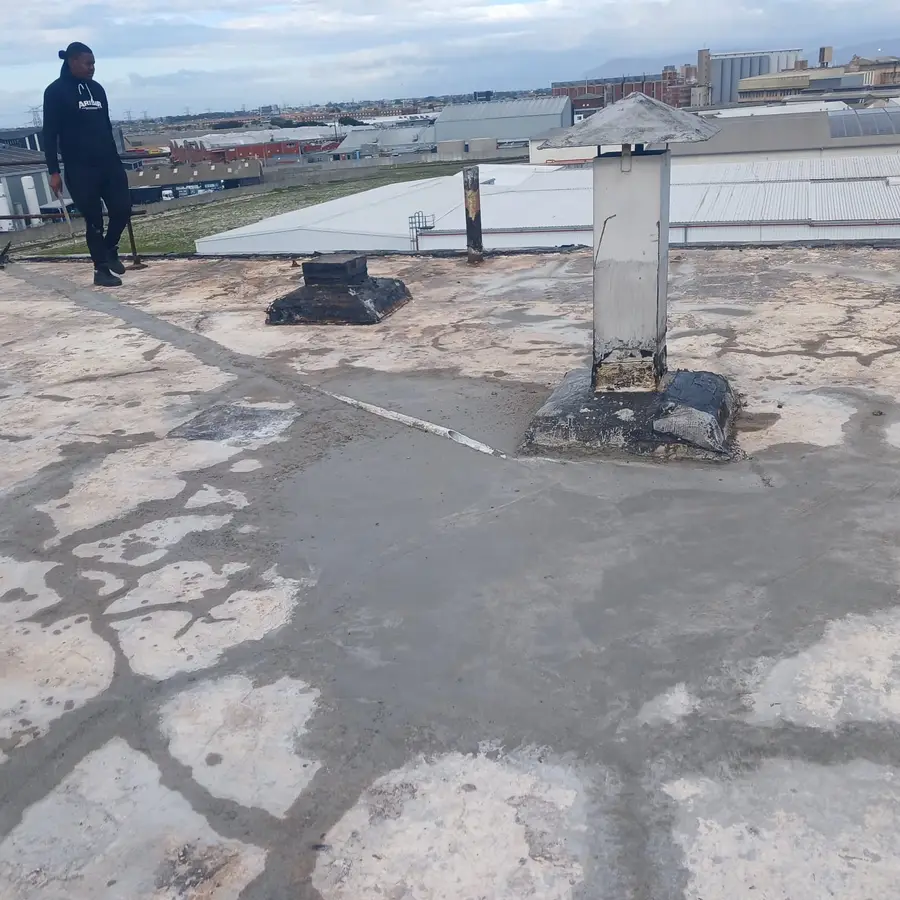
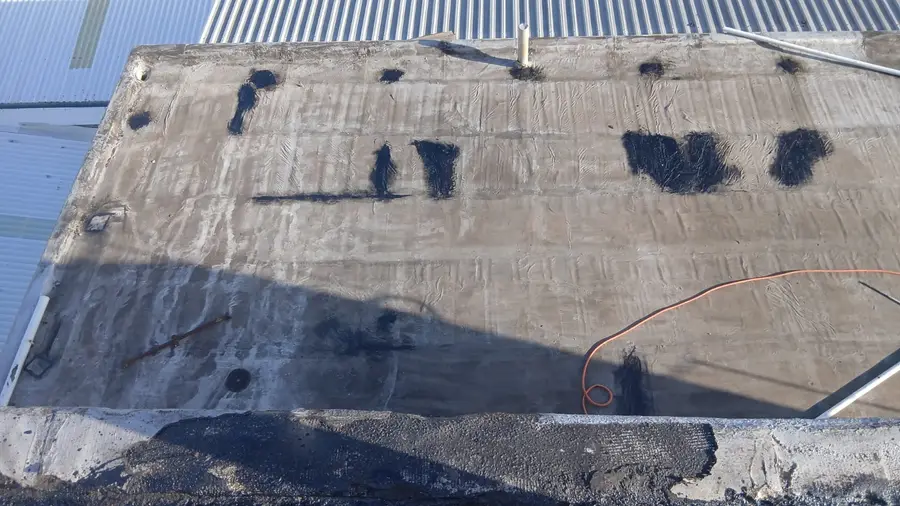
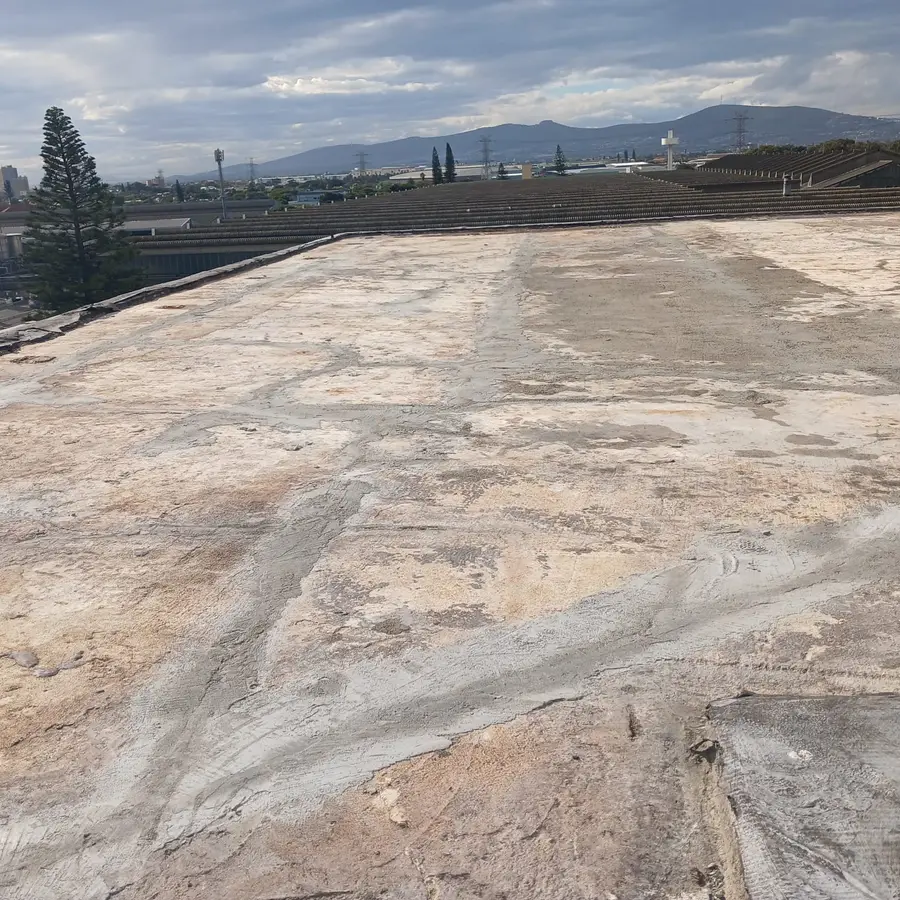
Sometimes. If the existing membrane is fully bonded, free of blisters, and hasn't gone brittle, a compatible top-coat or recoat layer can be applied — much cheaper and faster than a full strip. If the membrane is blistered, lifting at the laps, alligatored from UV, or contaminated with previous patch sealants of unknown chemistry, we have to strip back to the substrate and start fresh. The free on-site inspection determines which approach fits — we'll tell you which it is before we quote.
What does roof waterproofing cost per square metre in Cape Town?
Indicative 2026 ranges for the Cape Town metro: torch-on bitumen R300-R420 per square metre depending on substrate prep and access; liquid acrylic R150-R260 per square metre; liquid polyurethane R350-R550 per square metre on complex roofs with multiple penetrations; full polyurethane systems with a UV-protective topcoat R450-R750 per square metre. Sea Point, Camps Bay and Strand seafront jobs typically carry a 10-15% salt-exposure uplift on the spec. The free on-site inspection produces a fixed written quote — we don't bind to a per-square-metre number over the phone because access, substrate condition, parapet detailing and number of penetrations all shift the real cost.
Which roof types do you waterproof?
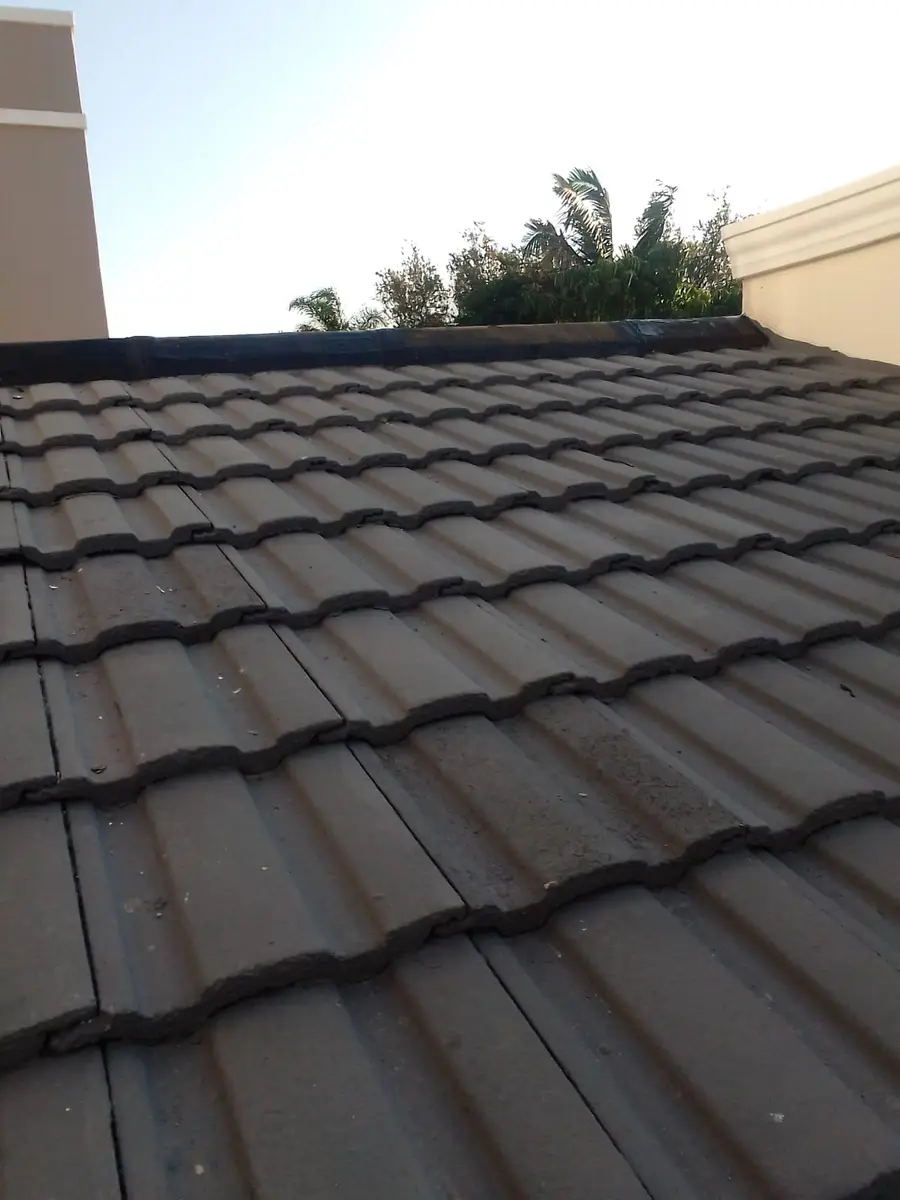
Every common Cape Town roof type. Flat concrete roofs and decks — torch-on bitumen or liquid polyurethane. IBR and corrugated metal sheeting — acrylic membrane systems with lap-screw and ridge detailing. Cement and clay tile roofs — Plascon Roof Care acrylic over a stripped, primed and repaired underlayer. Slate roofs in Constantia and Bishopscourt — selective replacement, valley re-leading and re-pointing rather than membrane work. Asbestos roofs — encapsulation with a coloured acrylic system instead of removal where the sheet is intact. The right call depends on the substrate condition; the inspection picks the system.
What goes wrong with roof waterproofing in Cape Town's climate?
Four predictable failures account for most callouts. First, parapet apron flashings on Sea Point and Mouille Point apartment blocks where the cap-flashing sealant perishes after a few years of north-westerly salt wind. Second, torch-on lap joints peeling on Camps Bay and Clifton roof terraces where UV plus salt cooks the bitumen at the seams. Third, IBR sheet uplift on Mitchells Plain and Khayelitsha houses after a south-easter, where the lap-screw washers crack. Fourth, blocked valley flashings on Constantia slate roofs choked with milkwood and oak leaf debris. A March or April pre-winter inspection catches all four before they become storm-night emergencies.
Roof Waterproofing across Cape Town
We cover the suburbs below — free on-site inspection on every quote:
Ready to Get Started?
Get a free, no-obligation roof waterproofing quote from our Cape Town team — on-site inspection included.
Get Free Quote Now