Balcony & Deck Waterproofing in Cape Town
Cape Town balcony, deck and entertainment-patio waterproofing — Sea Point apartments, Camps Bay decks and Bantry Bay cantilever balconies. Tile-lift, liquid membrane, granolithic screed and flood-tested reinstatement.
Benefits
150mm upturn detailing at every wall junction and balustrade fixing — the single biggest source of failure on coastal balconies
Flood-test against the unit below for a full 24-48 hours before any tile or screed reinstatement
Granolithic screed laid to a verified 1:80 minimum fall — no eyeballing, every outlet checked with a spirit level
Body-corporate documentation pack: scope letter, photographic record, manufacturer warranty assignment, AGM-presentation summary
10-year workmanship guarantee, transferable on resale of the unit
Manufacturer-approved liquid polyurethane and SBS-modified torch-on systems — Sika, Index, Mapei and Bostik specifications
Our Process
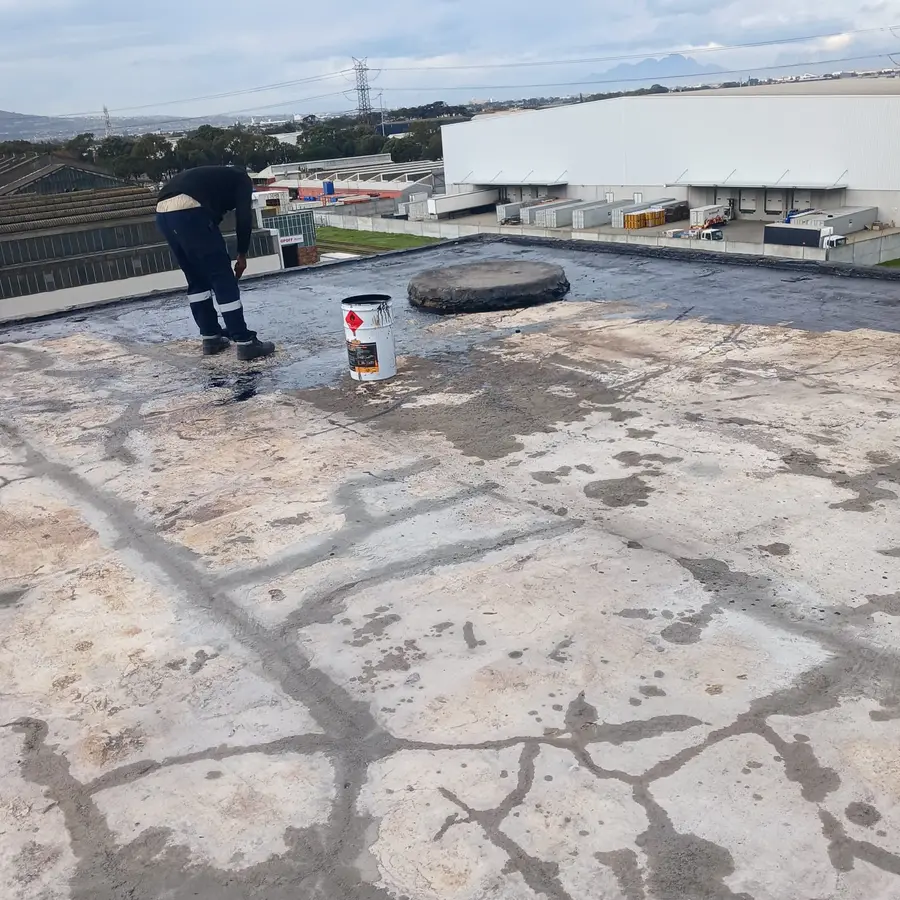
Site inspection — identify the leak path with moisture mapping, photograph the substrate condition, confirm whether the failure is in the membrane or the perimeter detailing
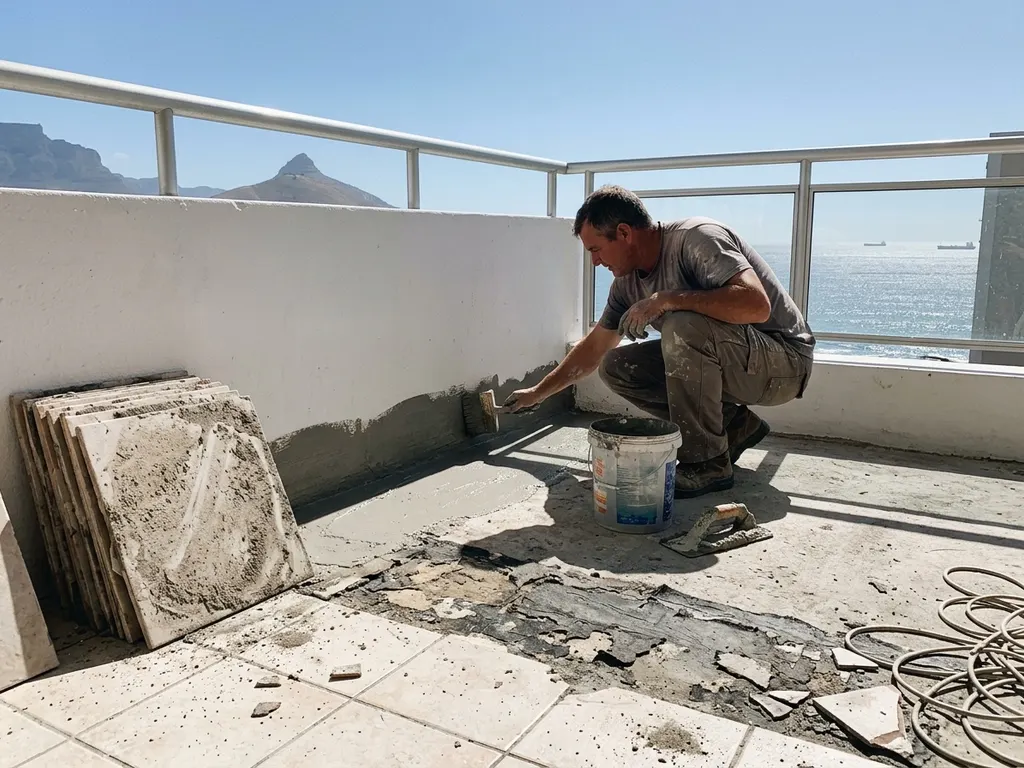
Strip the tile bed and existing screed back to the structural slab — careful tile recovery where the range is no longer manufactured
Repair the slab — chase out cracks, fill with non-shrink grout, re-cast the fall in screed where the original is wrong, and prepare every penetration (balustrade fixings, drain outlets, threshold) for a 150mm upturn
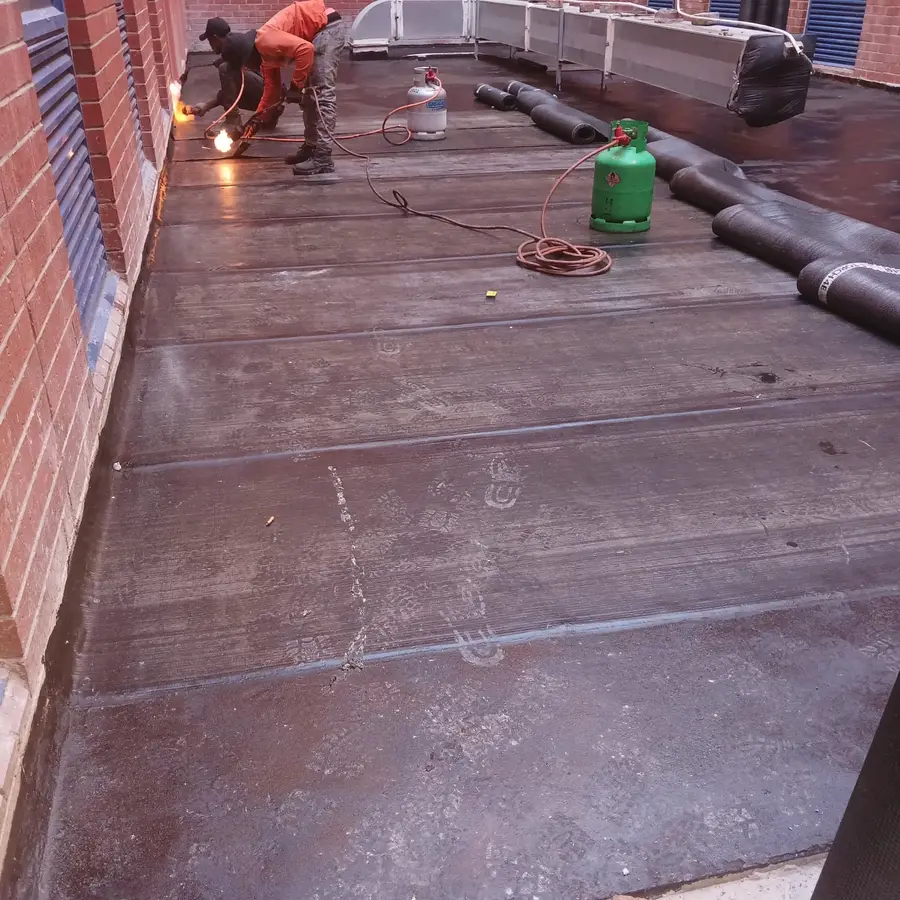
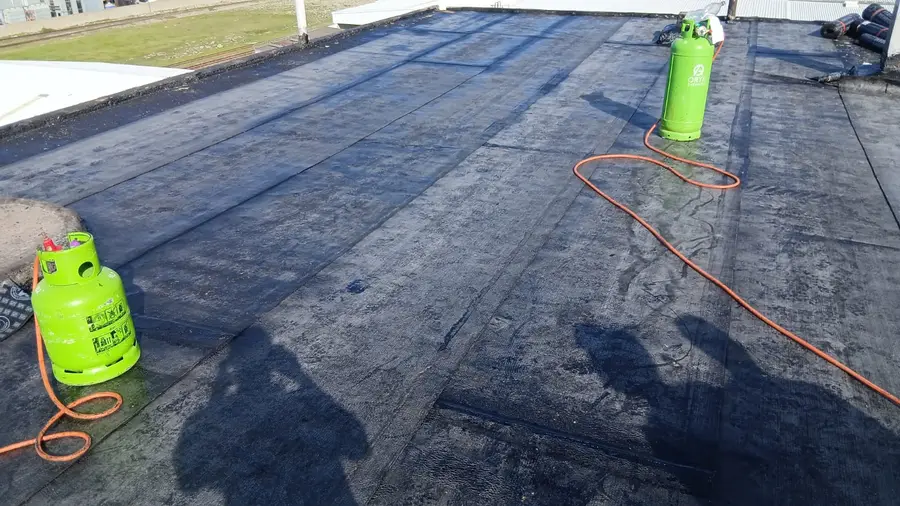
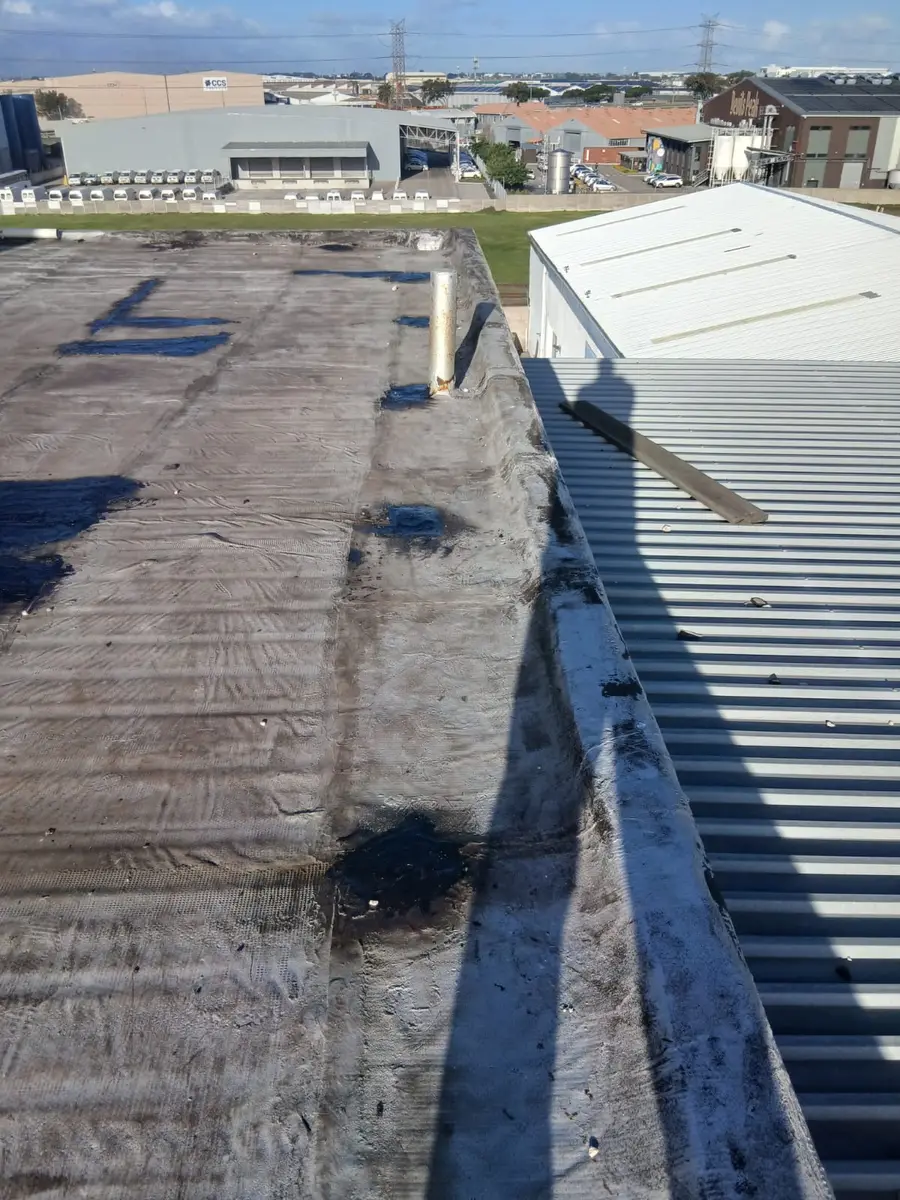
Apply the membrane — liquid polyurethane in two coats with a reinforcing fleece at all junctions, or SBS torch-on bitumen where the substrate and access allow naked flame
Flood test — plug the outlets, fill to 50mm depth, hold for 24-48 hours with the unit below monitored at the suspected leak point
Lay the granolithic screed bed at 1:80 fall, install perimeter and intermediate movement joints, then re-tile with porcelain or natural stone bedded in flexible adhesive
Grout with cementitious or epoxy product to suit the tile, silicone-seal the perimeter and balustrade collars, and issue the certificate of completion with the 10-year warranty
Pricing
From R280/m²
2026 Cape Town rates. Liquid PU membrane only (substrate already sound) R280-R450/m². SBS torch-on bitumen R350-R600/m². Full strip + waterproof + granolithic screed + re-tile R600-R1,100/m² (tiles excluded). Body-corporate scopes priced per unit count after the survey — typically R45,000-R90,000 per balcony for a 12-unit Sea Point block.
Get Accurate QuoteFrequently Asked Questions
Why can't a failed balcony membrane be fixed without lifting the tiles?
Because the waterproofing layer sits beneath the screed and beneath the tile bed, not on top. Anything painted onto the tile surface is a sealer, not a membrane — it lasts a single Cape winter at best. The membrane that actually keeps water out of the slab is buried 50-80mm down. To repair it you have to expose it, which means lifting tiles, breaking out the screed, and rebuilding the whole stack. We tell every Sea Point client this upfront because the alternative is six surface treatments over five years and still a leak.
What does salt spray actually do to a Camps Bay deck membrane?
Salt does two things. First, the chloride ions migrate through any micro-pore in the membrane and attack the reinforcing steel in the slab below — once that steel starts to swell with rust it cracks the concrete from the inside, and the membrane gets pushed up from underneath. Second, salt crystallises in any pinhole or seam and slowly opens it wider with every wet-dry cycle. Camps Bay, Llandudno and Clifton decks need a higher-spec system than inland Claremont — typically a 2.5mm liquid polyurethane with a polyester reinforcing fleece across the full deck rather than only at junctions.
Why does the upturn around the balustrade fixings matter so much?
On Bantry Bay cantilever balconies and exposed Strand sea-front decks, the wind drives rain horizontally into the base of every balustrade post. If the membrane stops at the slab surface and the balustrade is bolted through it, the bolt becomes the leak path — water runs down the steel and into the slab, and you see the stain on the soffit below within a season. The standard detail is a 150mm continuous upturn dressed up the post, sealed to the steel with a polyurethane fillet, and protected with a stainless cover collar. Get this wrong and the rest of the membrane is irrelevant.
Our body corporate has 14 balconies failing — how does the scope get structured?
Standard Cape Town body-corporate scope: stage 1 is a survey of all 14 units with moisture readings, photographs and a per-unit condition score. Stage 2 is the AGM document — a single scope letter listing units in priority order, indicative cost per balcony, the warranty terms, and proof of insurance. Stage 3 is execution, usually rolled across two to three weekends so residents only lose access to their balcony for a defined window. We've run this scope for Strand seafront blocks, Sea Point Main Road properties and Claremont townhouse complexes — the documentation is the same, only the unit count and the exposure category change the spec.
How long is the balcony out of use end to end?
Plan for 10 to 14 days. Day 1-2 strip the tiles and screed. Day 3-4 substrate repair and primer. Day 5-6 membrane application — two coats with overnight cure between. Day 7-8 the mandatory flood test runs. Day 9-10 granolithic screed laid and cured. Day 11-12 re-tiling. Day 13 grout. Day 14 silicone perimeter and handover. Anyone promising you a three-day balcony job is skipping the flood test, the screed cure, or both — and that's where the recurring leak comes from.
Timber entertainment decks — does any of this apply?
Only the underside. A timber deck is designed to let water pass between the boards, so you don't waterproof the deck surface itself. What you waterproof is the structural slab or sub-deck membrane that sits beneath the joists, which is the real watertight layer above a garage, storeroom or habitable space. The boards lift, the joists get inspected for rot — common in Camps Bay and Clifton where the marine air keeps timber permanently humid — and the membrane goes onto the slab below. Then the joists are reset with stainless fixings and the boards re-laid. If your deck is over open ground, you don't need a membrane at all; you need the joists Tanalith-treated and the fixings replaced with marine-grade stainless.
Balcony & Deck Waterproofing across Cape Town
We cover the suburbs below — free on-site inspection on every quote:
Ready to Get Started?
Get a free, no-obligation balcony & deck waterproofing quote from our Cape Town team — on-site inspection included.
Get Free Quote Now