Damp Proofing in Cape Town
Damp proofing across Cape Town — our team diagnoses and treats rising damp, penetrating damp, lateral damp and condensation in Sea Point apartments, City Bowl Victorian terraces, Constantia Cape Dutch homesteads and Cape Flats face-brick housing.
Benefits
Diagnosis first — our technician surveys with a moisture meter before specifying any chemical treatment
We separate rising, penetrating and lateral damp on the survey — each pattern has a different cure and different cost
Free written moisture-survey report you can keep, regardless of whether you proceed
Breathable salt-resistant render systems chosen to work with pre-1970 Sea Point, City Bowl and Constantia wall constructions, not against them
10-year workmanship guarantee on the DPC injection line itself
Single point of contact — same team surveys, injects, renders and hands back; no subcontractor handover
Our Process
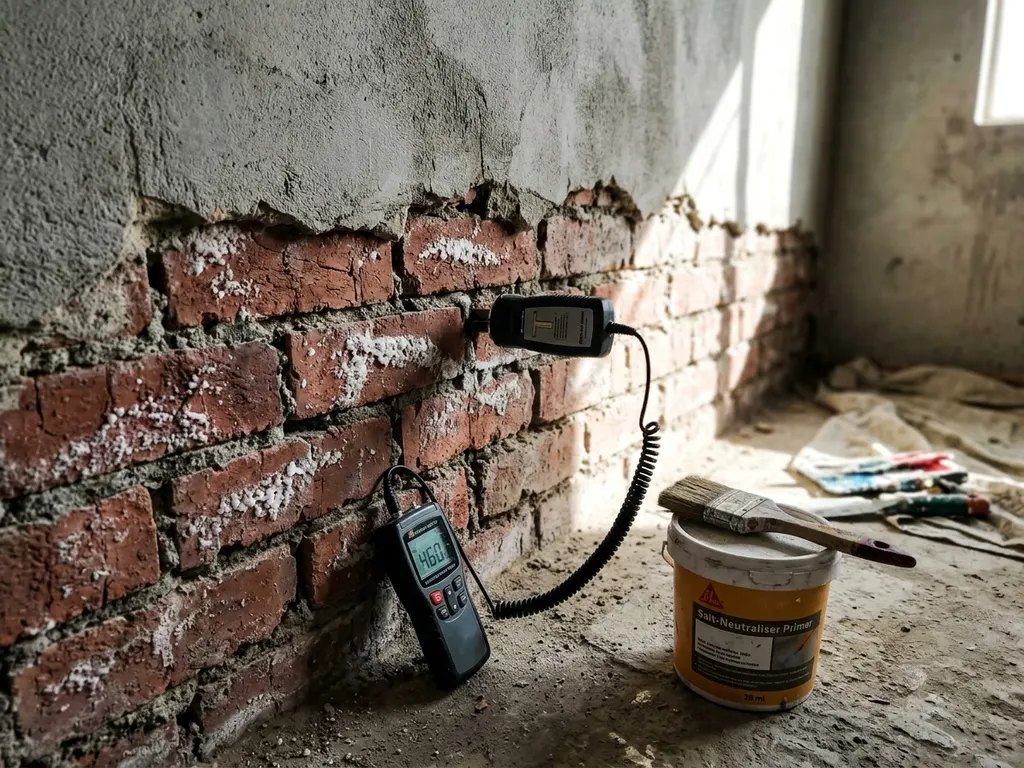
Free on-site moisture survey using calibrated moisture meter and, where needed, plaster salt-sample analysis
Diagnose damp pattern — rising (capillary), penetrating (wind-driven), lateral (split-level) or condensation
Hack off contaminated plaster to a height of at least 300mm above the visible tide-mark
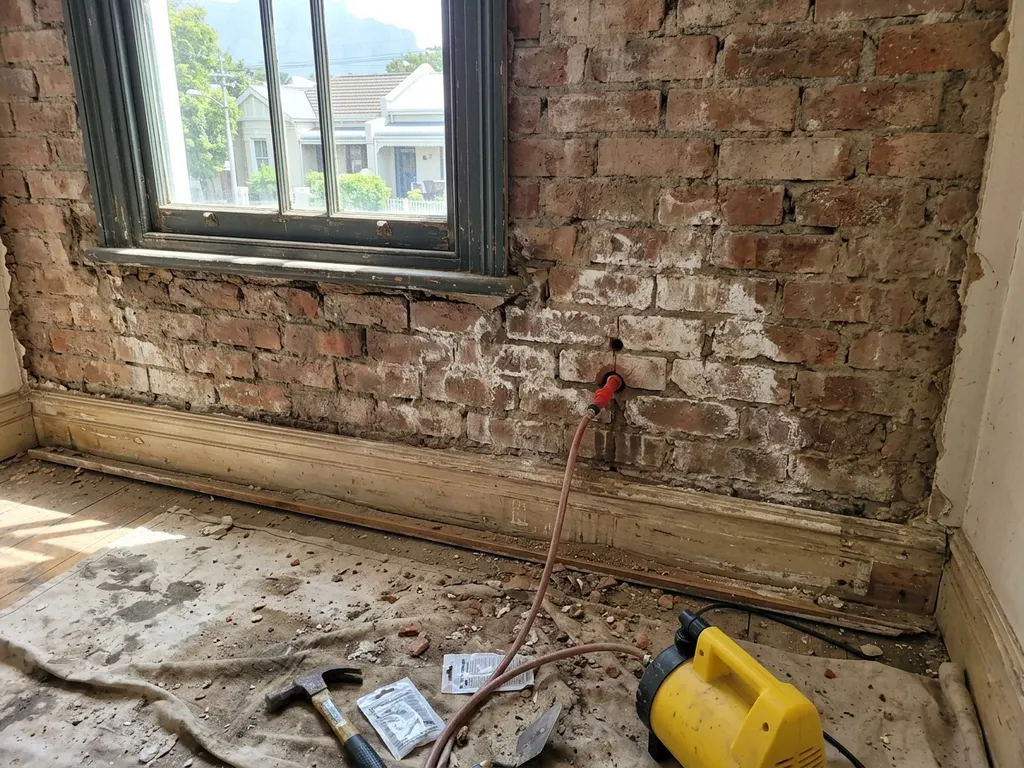
Drill 12mm holes at mortar-bed level and inject silane/siloxane chemical DPC cream (BS 6576 spec) where rising damp is confirmed
Apply salt-neutraliser primer to neutralise hygroscopic nitrates and chlorides drawn up by the damp
Re-render with a breathable salt-resistant cement-lime mix (typical SR1 / SR2 spec) — minimum 14-day curing
Re-skim and hand back ready for paint with a breathable mineral or silicate finish (no plastic-vinyl PVA)
Pricing
From R650/linear m
2026 indicative ZAR pricing for Cape Town metro work. Chemical DPC injection R650-R1,100 per linear metre. Salt-neutraliser plus breathable render R450-R900/m². Penetrating damp wall treatment R350-R650/m². Coastal jobs in Sea Point, Hout Bay, Strand and Gordon's Bay may carry a salt-loading uplift. Survey is free; the final quote is written on site once the meter reading is in.
Get Accurate QuoteFrequently Asked Questions
Why does rising damp keep showing up in older Cape Town houses?
Capillary action pulls groundwater up through brickwork wherever the original damp-proof course has aged out, was never installed, or has been bridged. We see it constantly in Sea Point Edwardian blocks and City Bowl Victorian terraces built with slate or bitumen DPCs — both materials are now eight to twelve decades past their service life. Bridging is the other common culprit: a raised flowerbed in Newlands, a new paved driveway in Pinelands, or an external render that buries the original DPC line. Cape Town's sandy soils drain faster than the clays inland, but the winter water table sits high enough from May through August to keep affected walls feeding.
Is this rising damp or penetrating damp — how can I tell before booking?
There are three quick visual clues. Rising damp draws a roughly horizontal tide-mark between 800mm and 1.2m up the wall, with salt blooms and paint blistering below it; the smell is musty and persistent. Penetrating damp ignores any horizontal line — it appears as irregular wet patches on whichever facade the weather hits, typically west or north-west walls in Hout Bay, Camps Bay and the Atlantic Seaboard, or below a perished window cill. Lateral damp is single-wall and arrives where soil is banked against the inside face — common in Gordon's Bay and Strand split-levels, also in Constantia properties built into a slope. A 20-minute moisture-meter pass settles it definitively.
Once we treat the wall, is the damp gone for good?
Provided the diagnosis was right and the full system was installed — chemical DPC, salt-neutraliser, breathable render, breathable paint — properly treated rising damp does not recur. The two recurring failure modes are predictable. First, the wrong cure: a contractor injects DPC into a wall that was actually suffering penetrating or lateral damp, and nothing changes. Second, the wrong finish: cement-rich render and PVA paint trap salts behind a plastic film, the salts re-mobilise the next winter, and the bubble pattern returns within eighteen months. Our 10-year workmanship guarantee covers the DPC injection line itself.
Do we really need to strip the old plaster off?
On every confirmed rising damp job, yes. The contaminated plaster has to come off to at least 300mm above the highest visible tide-mark and go straight into rubble bags. Decades of capillary action have loaded that plaster with hygroscopic salts — nitrates, chlorides, sulphates — which pull moisture directly from Cape Town's humid Atlantic air even after the wall behind has dried. Painting over the old plaster is the single most common reason a damp 'repair' fails inside a season, and it is the first thing we rule out before we quote.
What does the schedule look like from survey to finished wall?
On a standard 6-8 metre internal wall the work runs across three on-site days: survey day one, hack-off and DPC injection day two, salt-neutraliser primer and re-render day three. The new breathable cement-lime render then needs the full 14-day cure before any paint goes on — slightly longer in mid-winter when Cape Town's overnight temperatures slow the chemistry. End-to-end you should plan on roughly three weeks before you can repaint. We hand over a written programme before we start so there are no surprises.
Are the injection chemicals safe to live around — kids, pets, asthma?
Yes. The silane/siloxane DPC creams we use are water-based, low-VOC and effectively odourless once they have flashed off — usually within an hour of injection. The cream goes into a drilled mortar bed below skirting level, so there is no surface chemistry to contact. Most clients are back in the room the same evening. The older solvent-borne fluid injection systems that used to make houses unliveable for days have been phased out across the trade — if anyone quoting you mentions solvent fluid injection, that is a flag worth questioning.
Damp Proofing across Cape Town
We cover the suburbs below — free on-site inspection on every quote:
Ready to Get Started?
Get a free, no-obligation damp proofing quote from our Cape Town team — on-site inspection included.
Get Free Quote Now