Roof Coating & Painting in Cape Town
Cape Town roof coating and protective painting specialists — Plascon Roof Care, Dulux RoofGuard and Earthcote polyurethane systems for tiles, concrete and IBR sheeting.
Benefits
Halts the chalking that turns concrete and clay tiles dusty under Cape Town's 8-10 hour summer UV days
Reflective light-grey or white finishes drop loft-space temperatures 4-7°C on a 35°C day
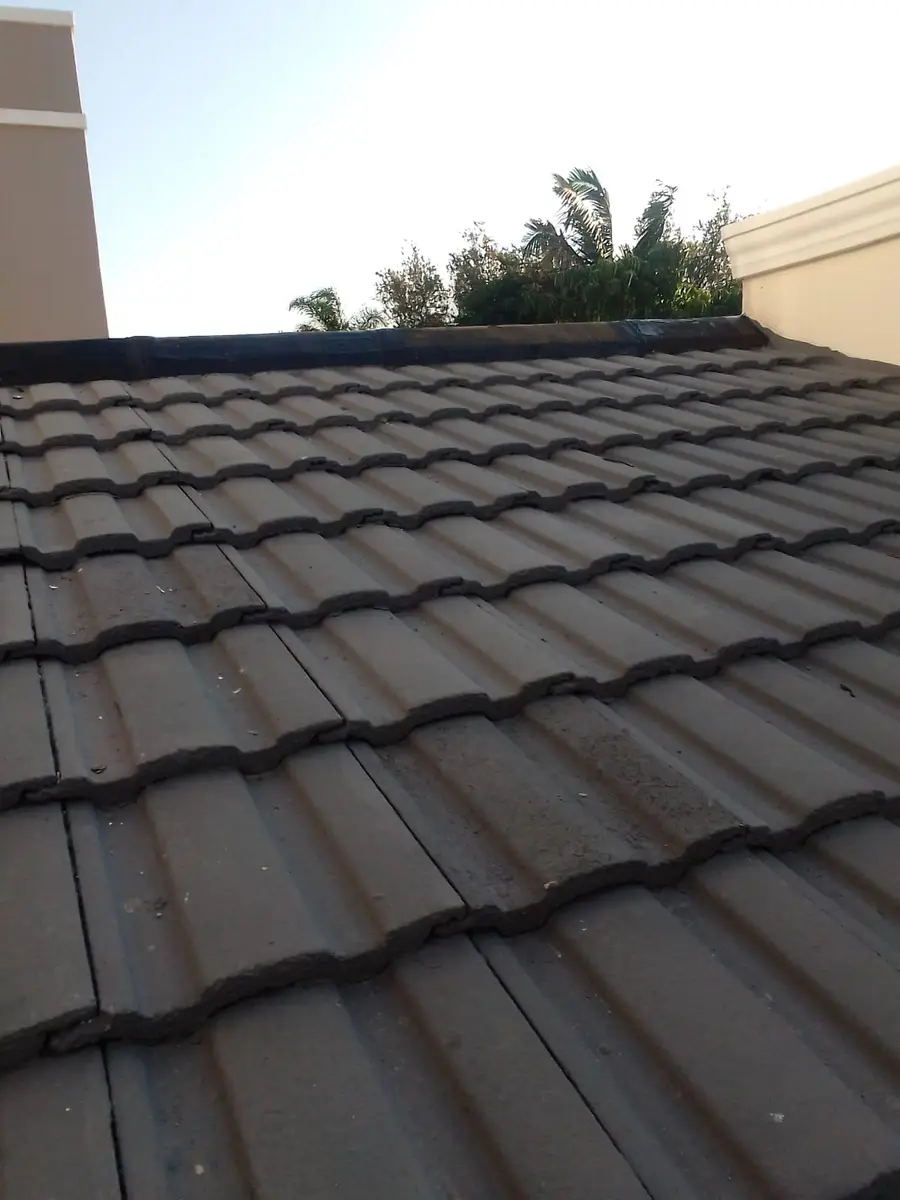
Bonds surface porosity and micro-cracks so wind-driven rain stays on the outside of the tile
Earthcote polyurethane systems rated for Atlantic Seaboard salt exposure and Bergvliet lichen-prone roofs
Manufacturer-trained applicators (Plascon, Dulux, Earthcote, Sika) — not generic painters with a roller
Written guarantee certificate, not a verbal handshake — 5 years acrylic, up to 10 years polyurethane
Our Process
Free roof walk and chalk-wipe test — substrate type, fade pattern, lichen load, crack mapping
High-pressure wash to strip lichen, moss, chalk and any failing previous coating (Bergvliet ridge-lines almost always need this)
Spot repairs — cracked tile replacement, ridge re-bedding, rust treatment on IBR overlaps and screw heads
Substrate-matched penetrating primer (different chemistries for clay, concrete and metal — no universal primer)
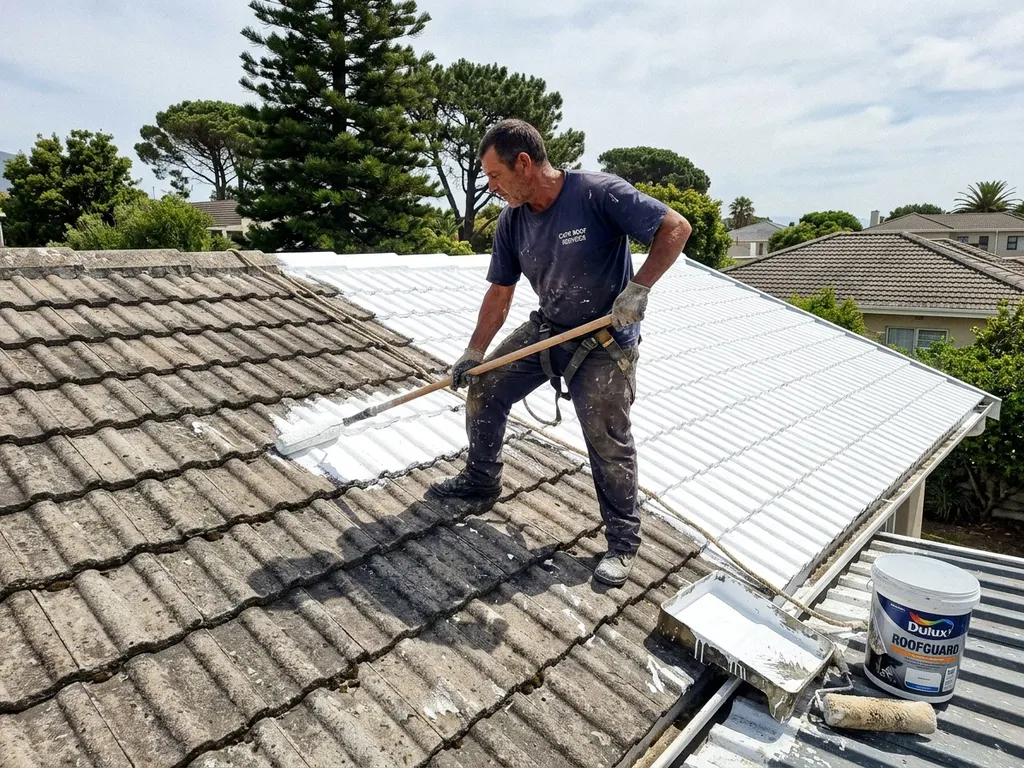
First finish coat by airless spray, with brush cut-in at gutters, ridges and verge edges
Second coat once the manufacturer's recoat window opens (4-24 hours depending on system and weather)
Final walk-through with the homeowner, sign-off snag list and handover of the written guarantee
Pricing
From R150/m²
2026 indicative ZAR rates. Acrylic coating R150-R260/m² (Plascon, Dulux at 5-9 m²/L), polyurethane R280-R450/m² (Earthcote, Sika), tile sealing R120-R200/m². Pressure-cleaning and crack repairs are quoted separately after the on-site inspection — never bundled blind.
Get Accurate QuoteFrequently Asked Questions
Is roof coating the same thing as waterproofing?
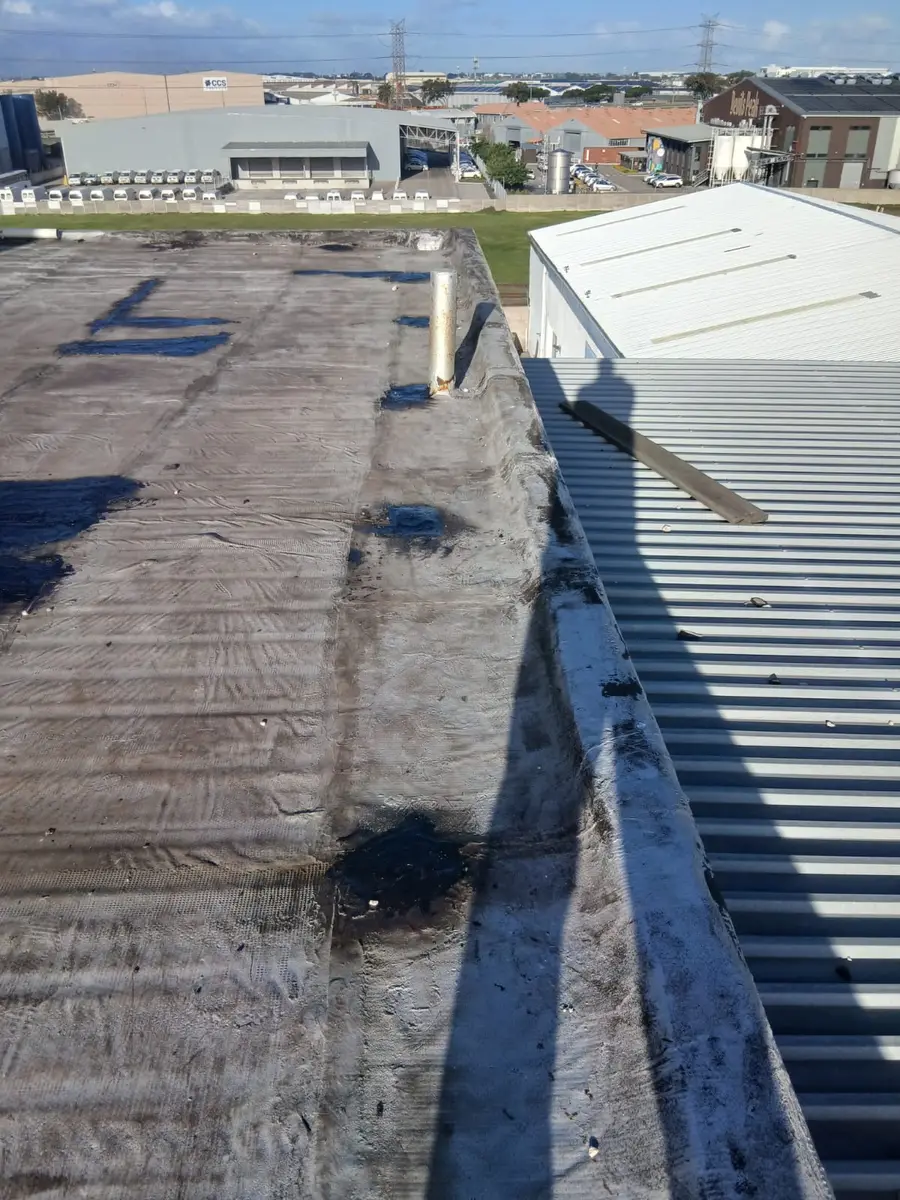
No — and this is the single most important distinction to understand before you spend money. A waterproofing membrane (torch-on bitumen, liquid polyurethane at 1.0-1.4 m²/L, or cementitious slurry) is a continuous engineered system designed to hold back standing or pooling water — that's what flat roofs, balconies and basements need. A roof coating is a paint film applied at 5-9 m²/L over a roof that already sheds water on its own (tiles, IBR sheeting). Coating protects against UV and seals porosity; it does not stop a structural leak. If your roof is actively leaking, or it's a flat slab, coating is the wrong product — you need a waterproofing membrane installed first, and the coating (if any) goes on top as a UV sacrificial layer.
Will my insurer accept a coated roof as waterproofed for a claim?
Generally no, and you should expect this question to come up at claims time. South African insurers distinguish between a roof coating (cosmetic / protective paint film) and a waterproofing system (engineered membrane with a manufacturer-backed guarantee certificate). If your flat roof is leaking and you've only had it painted with an acrylic roof coating, expect the assessor to record it as deferred maintenance and decline the claim. Pitched tile and IBR roofs are usually treated as inherently waterproof by virtue of their geometry, so a coating on top is fine and won't affect cover — but flat or low-pitch roofs need a real membrane with a paper trail. Always ask the contractor whether the spec they're quoting is a coating or a waterproofing system, and get it in writing.
How long will a roof coating actually last in Cape Town?
Honest numbers: 5-7 years for a two-coat acrylic system (Plascon Roof Care, Dulux RoofGuard), 8-10 years for an Earthcote polyurethane system. The variable that beats those numbers up is exposure. Cape Town summer means 8-10 hours of strong UV — north and west-facing slopes always fail first, sometimes by year 4 on an acrylic. Atlantic Seaboard properties from Sea Point through Camps Bay take salt-laden onshore wind on top of UV, so we default to polyurethane there. Bergvliet, Constantia and the Southern Suburbs deal with the opposite problem — shaded south-facing slopes grow lichen, which doesn't shorten coating life but does mean every recoat has to start with a proper biocidal wash.
Can I just paint over the old coating, or does it need stripping?
Depends entirely on what the old layer is doing. Three tests answer this on the day of inspection — a chalk wipe (rub a black cloth across the surface and look at the residue), an adhesion check (utility-knife crosshatch and tape pull), and a flake test on edges and laps. If the old coating is well-bonded, not chalking heavily and the substrate behind it is sound, a high-pressure wash plus a compatible top-coat works fine. If it's lifting, blistering or chalking off in your hand, you're stripping back to substrate — coating over a failing layer buys you 12-18 months before the new finish lifts with the old, and you've paid for the job twice.
Do lighter roof colours actually keep a house cooler?
Yes, and the effect is measurable. SABS-tested 'cool roof' acrylics in white, light grey or pale terracotta reflect 65-80% of incoming solar radiation; a faded dark roof reflects 15-25%. On a 35°C Cape Town summer day that translates into a 4-7°C drop in loft-space temperature, which carries down into the bedrooms below and reduces aircon load through the worst of February. Insurers don't yet formally discount cool-roof properties in South Africa (unlike some US states), but the electricity saving alone usually returns the colour-change premium within four to five summers.
How often should I plan to recoat?
Walk the roof every two years and budget for a full recoat on the cycle the system is rated for — 5-7 years on acrylic, 8-10 years on polyurethane. Three early-warning signs say the clock is running out: chalk transferring to a dark cloth on a wipe test, colour drift of more than two shades from the original spec, and visible hairline cracks at ridge cappings, valley laps or IBR overlaps. Catching it at year five typically means a single refresh coat at R80-R140/m² rather than the full strip-prime-and-double-coat at year ten.
What about tile sealing — does it stop tiles cracking?
No, and don't let anyone sell it to you on that promise. Tile sealing bonds the surface micro-cracks that develop in older Coverland and Marley concrete tiles, which stops wind-driven rain soaking through the body of the tile and saturating the timber battens below. It does not prevent fresh cracking from foot traffic, hailstones or thermal movement. Cracked tiles always get replaced individually before any sealer goes down — sealing over a crack is worse than leaving it alone, because it traps moisture inside the crack and accelerates the failure of the surrounding tile.
Roof Coating & Painting across Cape Town
We cover the suburbs below — free on-site inspection on every quote:
Ready to Get Started?
Get a free, no-obligation roof coating & painting quote from our Cape Town team — on-site inspection included.
Get Free Quote Now